
Tuesday, October 2, 2018

Friday, September 21, 2018
Draft proposal to remove the St. Louis River Area of Concern fish tumors and deformities impairment available for public review and comment
Research confirming that white sucker fish in the St. Louis River Area of Concern have a low rate of fish tumors and deformities is leading to a request by the Wisconsin Department of Natural Resources and Minnesota Pollution Control Agency to remove an impairment.
Fish were sampled in 2011, 2013 and 2015 and research was conducted to determine if fish tumors and deformities were more common in the St. Louis River Area of Concern. Multiple lines of evidence verified that the tumor incidence rate was not significantly different between the river and Lake Superior. Further, the St. Louis River AOC tumor rates were lower than other similarly studied AOC and non-AOC sites in the Great Lakes. The age and gender of the fish were found to be more important factors for fish tumor development.
Because of these findings, the Fish Tumors and Deformities Beneficial Use Impairment is proposed for removal. The removal recommendation and study are available online for public review and comment from September 21 through October 12, 2018.
To learn more about the proposal and to provide comments, please see the following documents:
Comments can be submitted to Matt Steiger, Wisconsin DNR AOC Coordinator, at Matthew.Steiger@wisconsin.gov until 5:00 pm October 12, 2018.
Paper copies of the draft document are also available for review in the Superior Public Library at 1530 Tower Ave. Superior, WI and the Duluth Public Library at 520 W. Superior St. Duluth, MN. Public comment forms are included and formatted for mailing to Matt Steiger, Wisconsin DNR, 1701 N. 4th St, Superior, WI 54880. Comment sheets may also be scanned and emailed to Steiger.
Written and electronic comments sent or post-marked before 5:00 pm on October 12, 2018, will be considered. A final removal recommendation will be submitted to the U.S. Environmental Protection Agency after public input has been reviewed and considered.
General questions about the removal proposal may be directed to Matt Steiger at 715-395-6904 or Barb Huberty, Minnesota Pollution Control Agency AOC Coordinator, at 218-302-6630.
The St. Louis River Area of Concern will have seven remaining Beneficial Use Impairments to address before the entire Area of Concern can be delisted. The St. Louis River Area of Concern is one of forty-three Areas of Concern designated in 1987 as the most highly contaminated areas in the Great Lakes.
This work was included in the St. Louis River Area of Concern Remedial Action Plan and was funded primarily by the federal Great Lakes Restoration Initiative. The primary partners involved in this work included the Environmental Protection Agency, Wisconsin Department of Natural Resources, Minnesota Department of Natural Resources, Minnesota Pollution Control Agency, and the Fond du Lac Band of Lake Superior Chippewa.
Friday, July 20, 2018
2019 WCSFO KIDS CLINIC MEETING DATES
EVENT
DAY DATE LAST YR DATE
Meeting
Thursday 12-06-2018 12-07-2017
Meeting
Thursday 01-24-2019 01-25-2018
Clinics
Saturday 02-09-2019 02-10-2018
Meeting Thursday 02-21-2019 02-15-2018
Meeting Thursday 04-04-2019 04-05-2018
Clinics Saturday 04-13-2019 04-14-2018
Wrap-up meeting to be announced
later
All clinic meetings to be held at Greenfield
Park at 7:00 PM
Thursday, July 5, 2018
Hope Everyone is Enjoying Their Summer!
Hunger Task Force needs our help at the
fish cleaning station to filet donated Lake Michigan trout and salmon from
generous tournament participants. The fish we process into cleaned filets, gets
put into family size portions, put into Ziploc storage bags and onto the
refrigerated truck to be delivered on Monday to area families that would not
normally get this valuable protein in their diets.
 Please share this
with fellow club members or if you have someone such as a teenager that needs
service hours, or a friend/spouse that wants to help but doesn't clean fish
well, they can still help by bringing fish to a cleaner, putting processed
filets into storage bags, changing water buckets, putting fish scraps down the
incinerator, loading bins onto the refrigerated truck, etc.
Please share this
with fellow club members or if you have someone such as a teenager that needs
service hours, or a friend/spouse that wants to help but doesn't clean fish
well, they can still help by bringing fish to a cleaner, putting processed
filets into storage bags, changing water buckets, putting fish scraps down the
incinerator, loading bins onto the refrigerated truck, etc.
Please sign
up via email or text (wildcatcreekfarm@gmail.com or 414-467-6658) for this
event as soon as possible if you are able to help the whole 4.5 hourrs or just
part of it. "Many hands make light work" and it's great to be
outdoors with fellow fisherman for a good cause!
What to bring:
Filet knife (manual or electric) HTF does have some extras
on hand
Apron and hand rag (HTF has paper towel but a rag is
helpful)
Wear old clothes/shoes you don't mind getting wet or can
throw out.
Possible bug lotion for flies
Water is provided for volunteers from HTF, and the
concession stand will be open.
The Brew City
Fish Tournament is scheduled for Saturday, August 4 (rain date August 5th) at
McKinley Marina located at 1750 North Lincoln Memorial Drive Milwauke, WI
53202
The fish
tournament runs 5:30 am - 1:30 pm
(but fish
processing volunteers are needed noon - 4:30 pm) boats must be in the breakwater
by 1:30 for weighing in which begins at noon.
For more
information on the the tournament
With Gratitude,
Brenda Rosin-Schaff
Wisconsin Council of Sport Fishing Organization (WCSFO)
&
Kids Fishing Clinics of Southeastern WI (KFC)
Tuesday, June 26, 2018
Summer inspectors help boaters prevent the spread of invasive species in Wisconsin's waters
June 26, 2018
By Jennifer A. Smith
As another Wisconsin summer hits
its stride, it's a good time for Wisconsin boaters to think about responsible
boating practices. They can enjoy the great outdoors and protect our
waters at the same time by taking simple actions to prevent the spread of
aquatic invasive species (AIS).
Clean Boats, Clean Waters is a
statewide boater education program that Wisconsin Sea Grant implements in
partnership with the Wisconsin Department of Natural Resources and University
of Wisconsin-Extension. With the help of Great Lakes Restoration
Initiative funding, Sea Grant educates boaters along the Great Lakes coast.
Trained watercraft inspectors are
stationed in four areas of the state, where they teach boaters how to take the
preventative steps required by state law to minimize the risk of spreading
unwanted “hitchhikers,” such as zebra mussels and quagga mussels, from one body
of water to another.
Tim Campbell, Sea Grant’s AIS
outreach specialist, works closely with Wisconsin DNR on the program. As
he summed up Wisconsin law, “Basically, you’re not allowed to transport aquatic
plants, mud or animals on a public roadway. You also can’t transport lake or
river water, so you need to drain out the water before leaving the boat
landing.”
While more than 90% of boaters say
they are familiar with Wisconsin law and “always” or “usually” take steps to
clean their watercraft, that still leaves many boating trips each year that
present some risk.
Inspectors talk to boaters (and
users of other watercraft, like kayaks and paddleboards) about these
requirements and, when needed, help them take the necessary actions, such as
removing plants from a hard-to-reach part of a trailer or draining excess water
from boat compartments.
“Especially at the beginning of the
boating season, people can be rusty in their boating habits,” said
Campbell. “And it’s always good for inspectors to be there to talk to the
few people who haven’t yet heard the ‘Stop Aquatic Hitchhikers!’ message.”
Clean Boats, Clean Waters
inspectors are based out of Appleton, Green Bay, Milwaukee/Port Washington, and
the Kenosha/Racine/Milwaukee area. The aim is not to penalize boaters,
but to help them comply with the law and protect our waters so they can be
enjoyed for generations to come.
“Many of the boaters thank me for
being out and doing my job, which is pretty cool,” said inspector Matthew
Cherney, a UW-Madison student majoring in geological engineering and
geoscience. Cherney, who is from Appleton, covers boat launches in and
around Milwaukee.
The inspectors are all college
students and work through Labor Day or so. It’s gratifying work, said
Nick Holtmeier, a UW-Whitewater student majoring in biology and Spanish, whose
area is northeastern Wisconsin. "My favorite part of performing
inspections is getting to talk to the public to inform them about a topic for
which I have a passion.”
The program has been quite
successful in holding the line on the spread of AIS. Said Campbell,
“Clean Boats, Clean Waters has been going on since 2004, and we know that it
works to change boater behaviors. It’s the best program we have to really
make an impact on the spread of invasive species.”
Tuesday, May 22, 2018
Optimum Timing for Dredging in Great Lakes Harbors Takes a More Scientific Turn
“Dredging Windows” Are Topic of Scoping Meeting for Pilot Project"
May 22, 2018By Marie Zhuikov
It can’t happen just any old time. Removing sediment from or adding it to harbors to help ships pass or for construction projects is regulated by state and federal rules designed to lessen impacts to the plants and animals living in both marine and fresh water.
“We used to call them fish windows,” said Gene Clark, Wisconsin Sea Grant coastal engineer. “But we’ve learned that other species can be affected by the timing of dredging as well – things like mussels, amphibians and wild rice. It’s not just a fish window, it’s an environmental window for dredging.”
These timing windows were first created almost 50 years ago, spurred by the passage of the National Environmental Policy Act in 1969. They hardly ever change and are enforced through the permitting process by the U.S. Army Corps of Engineers and state departments of natural resources. The designations of these windows were set by natural resource experts, however specific science-based data to help them was lacking.
According to a white paper on dredging windows in the Duluth-Superior Harbor, a number of new scientific tools are now available to “evaluate the specific impacts of dredging, to more accurately monitor the biological integrity and specific biological functions of different parts of our harbors, and to assess changes due to season variation. In addition, new engineering technologies have resulted in new dredging methods and construction options to reduce the impacts of the dredging process, as well as in-water facilities maintenance and fabrication.”
Bringing dredging windows up to date was one of the most important issues identified by harbor stakeholders when asked where they thought Sea Grant could make a difference, Clark said. At stake is money and time, not to mention the wellbeing of the environment.
“The timing of the dredging windows can be very strict, and they can make projects more costly,” said Clark. “The problem doesn’t just affect our harbor. All dredging projects on the Great Lakes have this issue, too.”
Clark believes that with more information about where critical habitats are in the harbor and when important wildlife activities are going on, such as fish spawning, money can be saved on behalf of taxpayers and the contractors.
Clark has teamed with Dale Bergeron, Minnesota Sea Grant maritime extension educator, and members of the Duluth Seaway Port Authority to work on the issue. They have been working for a year to write a white paper, develop a process for deciding what studies are needed, and provide a template for studies in other ports.
“Our goal is to facilitate discussions between the regulatory agencies, the U.S. Army Corps and the contractors,” Clark said. They also plan to work with academic researchers to find funding for the studies.
One activity is taking place next week on May 30. A select group of people from the Duluth-Superior area have been invited to participate in a scoping meeting to conduct a “Science-based Review of Environmental Windows for Dredging and In-water Construction in the Duluth/Superior Estuary and Harbor.”
On the agenda is the history of dredging windows, and defining biological issues such as locations of high- and low-productivity areas and the impacts of seasons and climate variability, and discussion of new technologies that are available for dredging and reducing turbidity. The resulting tasks will take the form of a pilot project, for which funding will be sought.
“Perhaps in a couple of seasons, we’ll have enough information so we can actually make a difference in when dredging windows are set, and potentially save the corps some money, save the contractor money and save some angst on behalf of the permitting agencies,” Clark said.
Wednesday, May 9, 2018
KIDS FISHING CLINIC MEETING MINUTES OF APRIL 26, 2018
Brenda Rosin Schaff called
the meeting to order at approximately 7:30 PM.
Everyone present introduced
themselves and their club affiliations.
Attendance: Brenda Rosin Schaff, Ron Gray, Klye Olsen, Duane Marcell, Brandon Witt, Ryan Flohr, Dave &
Karen Schmitt, Steve Spielbauer, Dan & Diane Floryance, Jim Gilles, Jean
Tackes, Jill Levy, Rick Frye, Rick Kirkley, Mary Lee Hatland, Don & Judy
Kirby, Cliff Schulz, Wayne Avery, Cornell
Stroik, Dave Mueller, Kiven Groff, Barb Stevenson
Brenda opened the meeting by
thanking everyone for there attendance. Because Klye Olson of the DNR had to
leave to go back to work she had Klye described what his job consists of on a
typical day. Kyle gave a detailed description of what his day is like.
Brenda then asked Dave Mueller to give us an up-date
on the Hunger Task Force Hatchery and his stocking of the ponds. Dave talked
about the various fish the hatchery has, their growth rates, talked about the
pump problems they have had to over come. Dave also talked about the stocking
of the ponds, species stocked, numbers stocked and dates of he stocking.
Brenda addressed the clinics
and the weather conditions we had for the clinics. She noted she still has not
heard from all the parks with the final numbers. She will send out final
numbers when all the clubs get there numbers in. She noted that she and Ron had
received e-mails stating that we should have cancelled the clinics due to the
weather conditions. As everyone knows it is our policy to run the clinics no
matter what the weather conditions are because a larger part of the teaching is
conducted in doors. At this point in the meeting an open discussion took place.
Points discussed were the logistics of the following. Present fishing
regulations for kids only fishing, limitations in time frame and equipment of
stocking, park reservations, commitments of volunteers for additional dates,
providing the kids a season to fish without adult competition, scheduling
around the Easter holiday, life of the stocked trout in the ponds as water
warms. During this discussion the subject of illegal adult fishing came
up. After discussion the best thing to
due is call the DNR hot line. After all discussion a vote was taken on
continuing our policy of not cancelling due to weather conditions.
Brenda talked briefly about
the donations we received and the thank you letters that need to be sent out.
She also addressed the schedule for next year. Ron commented that we could
start working on next years flyer today by having the members in attendance
commit to next years clinic dates which were announced as Feb. 9th and Apr 13th
2019. Badger Fisherman’s League stated they could not continue with the
clinic’s due to a lack of help and the Wisconsin Fishing Club stated they are
dropping out of the ice fishing clinics due to poor attendance at their park. Wern
Valley indicated they will no longer support the clinics due to a lack of
volunteers. Ron said he will then move forward with notifying the clubs not in
attendance at this meeting for their commitments to next years clinics so the
flyers can be finalized. He will also need to talk with the Waukesha County
Parks to see which parks will be available next year. During discussion it was
noted that the registration forms used needed some space adjustments for entry
information. Brenda said she will make
adjustments for next year.
During discussions Brenda
noted that American Legion Post 537 gave the Kids Fishing Clinics a very
generous donation. Ideas discussed for using this donation were fish tanks for
displaying fish and fishing tackle that could be purchased for kids prizes at
the clinics. Discussion also noted that donation barrels could be placed at the
clinic sites for donations to the Hunger Task Force who supports the clinics at
their many distribution sites.
Brenda introduced Cornell Stroik treasurer of the Wisconsin Council
of Sport Fishing Organizations (WCSFO). Cornell gave a talk about how and why
the WCSFO was formed and their interface between the sport fishing clubs and
the department of natural resources. He indicated the WCSFO is a 501C3
organization and finances the printing of the kids fishing hand books. He indicated
that most of the kids fishing clinic clubs presently belong to the
organization. The president of the WCSFO has retired from his position due to
health reasons. Cornell has asked that the organization look
into training someone for his position. Ron Gray is taking over the position as
secretary from Brenda due to her health reasons. This leaves the offices of
President and Vice President open and the need for someone to train for
treasurer. The WCSFO holds two 2 scheduled meetings a year one in March and
October on the third Saturday of the month. The WCSFO has a seat on the DNR
fishery advisory board.
Brenda asked if anyone was interested in these
positions and would like to run in an election for them. Two members were and a
request was made by another if we could hold off on an election so their club members
could be notified. Brenda stated we will hold an election meeting on Thursday
May 24th . The location will be the Milwaukee Casting &
Sportsmens Club at 18200 W. Cleveland Ave. New Berlin, WI at 7:00 PM. Please
note: That you or your club must be a member of the WCSFO to be considered for
these positions.
Respectfully:
Ron Gray, Secretary
Thursday, April 26, 2018
Draft proposal to remove Lower Menominee River Area of Concern Restrictions on Fish Consumption available for public review and comment
After nearly 30 years of cleanup and remediation efforts, the Wisconsin and Michigan Departments of Natural Resources are seeking public comment on our joint recommendation to remove the listed impairment for Restrictions on Fish Consumption from the Lower Menominee River Area of Concern (AOC). A draft proposal is now available for public review that summarizes the remediation actions taken and results of follow-up testing that indicate AOC targets are being met. The proposal also includes documentation of stakeholder involvement in this process.
Anyone wishing to review the proposed impairment removal document can find it here:
Restrictions on Fish Consumption Impairment Removal Proposal (PDF)
Information about the Lower Menominee River Area of Concern is available at this link.
Comments can be submitted to Vic Pappas, Lake Michigan Field Supervisor, at Victor.Pappas@Wisconsin.gov until May 18, 2018 at 5:00 p.m. Questions about the BUI removal may be directed to Mr. Pappas or to the Michigan DNR Area of Concern Coordinator, Stephanie Swart, at 517-284-5046 or by e-mail at swarts@Michigangov.
The removal proposal is made by the Wisconsin DNR Office of Great Waters, Michigan DNR Office of the Great Lakes and supported by the Lower Menominee River AOC Technical and Citizens Advisory Committees. Sediment removal, cleanup projects and other changes have reduced pollutants within the boundaries of the Area of Concern and existing advisories relate to pollution coming from outside of the AOC.
It’s important to note that while the area of concern is no longer a source of certain pollutants that have been found in fish, pollution is still coming from outside the area. As a result, advice about eating fish should still be followed This advice can be found at: https://dnr.wi.gov/fcsexternaladvqry/fishadvisorysrch.aspx.
To learn more visit http:/dnr.wi.gov/ and search “AOC.”
Friday, April 13, 2018
2018 Peshtigo River State Forest work plan posted for public comment
The 2018 integrated property management meeting minutes and work plan for the Peshtigo River State Forest have been posted for public review, questions or comments. These documents can be found on the ‘Management and Business' tab of the Peshtigo River State Forest home page.
Comments on the minutes are due by April 30, 2018 and should be directed to:
Avery Jehnke, Property Manager
Peshtigo River State Forest
N10008 Paust Lane
Crivitz, WI 54114
715-757-3965
Forest staff dealt with record rainfall and several staffing vacancies in 2017 but managed to move forward with projects, recreation operations and establish and administer timber sales, which generated approximately $181,000 in stumpage revenue during 2017.
The state forest team will have a new look in 2018. Three vacancies have been filled, including a property manager/forester and two rangers who will support recreation operations on the state forest.
The 2018 work plan includes four timber sales prepared for bidding in 2018 and several areas to be evaluated for future timber harvest. Other projects planned include boat landing improvements, opening of a new golf cart trail, invasive species control and road work in high-use areas.
Thanks for your interest in the Peshtigo River State Forest,
Avery
Friday, April 6, 2018
Sea Grant Helps City Clean Up Its Zoning Code “Monster”
April 2, 2018
By Marie Zhuikov
The city of Superior, Wisconsin, is surrounded by water. The St. Louis River bounds it to the west, the Nemadji River to the east, the Pokegema River to the south, and the harbor and Lake Superior to the north.
“Protecting that water as well as our overall natural environment should be one of our highest priorities,” said Superior Mayor Jim Paine. To that end, city staff and a contractor are beginning a process this summer, led by Wisconsin Sea Grant’s Julia Noordyk, to review and update city codes and ordinances to reduce stormwater pollution.
The effort is thanks to a grant from the Wisconsin Department of Natural Resources and involves something called a green infrastructure audit. Green infrastructure includes creating natural water-collecting features like rain gardens, permeable pavement and green roofs to help soak up snowmelt and rainwater. This runoff water can often be laden with contaminants like salt in the snow or oil from roads. It bears a toxic load as it infiltrates surface waters or groundwater.
Interest in a green infrastructure audit grew from a workshop Noordyk, water quality and coastal communities outreach specialist, put on last year in Duluth with staff from Minnesota Sea Grant.
“We did a full-day workshop for communities around the Duluth-Superior area,” Noordyk said. “We had planners, city staff and stormwater engineers in the room. We talked about why green infrastructure is important and why codes and ordinances are important to green infrastructure implementation. Then the communities did an exercise that included community scoping and applying the audit tool to their stormwater ordinance.”
The workshop spurred the idea of cooperation between Superior’s Environmental Services Division of Public Works and Noordyk, which led to the successful grant proposal for the code audit. Activities will follow the process outlined in Wisconsin Sea Grant’s Tackling Barriers to Green Infrastructure: An Audit of Local Codes and Ordinances workbook, which involves community scoping, auditing codes and ordinances, and developing a strategy for adoption of the changes.
Noordyk expects to have her work cut out for her, playfully stating, “I’ve already heard that Superior’s zoning code is a monster.” The mayor echoes this viewpoint. “I think everybody agrees that our zoning codes need revision. The most important thing, though, is that we have a vision for what kind of city we want as we’re revising them.”
Noordyk stresses that this is a community-driven process. “The main strategy is to bring everyone on board at the beginning. We’re not trying to do code changes that the community is against. The code audit is about going through the process and figuring out what changes make sense and will help the community reach its goals.”
The process will take several months and several community meetings. The first will be on May 17 when Noordyk makes a presentation to the Superior City Council, which is the organization that needs to approve any code and ordinance changes.
Mayor Paine is excited about the green infrastructure audit. “It’s one more step toward making a better city. Green infrastructure is generally cheaper, it’s permanent and it does the job better than anything else we can create,” he said.
Public meetings set for Superior Coastal Plain, Northwest Sands, and Northwest Lowlands Ecological Landscape regional master plans postponed due to weather
Public comment period will be extended through May 3
ASHLAND, Wis. - With a spring snow storm set to impact much of the state, the public open house meetings for the Superior Coastal Plain, Northwest Sands, and Northwest Lowlands Ecological Landscapes have been postponed. Concerns over safety for the public and staff traveling to the meetings drove the decision to reschedule.The public open house meetings will be held later in April. Both meetings run from 5 to 7 p.m. and will be held:
- Tuesday,
April 24, Ashland at Northern Great Lakes Visitor
Center, 29270 County Highway G
- Wednesday,
April 25, Spooner at DNR Service Center, 810 W
Maple St.
In addition to the opportunities to offer input online or at public meetings, people may contact DNR Planner Phil Rynish, by email at phillip.rynish@wisconsin.gov, phone at 608-266-5854, or US mail at Phil Rynish, Wisconsin DNR, P.O. Box 7921, Madison, WI, 53707-7921.
The public comment period for the first phase of planning will now remain open through May 3, 2018.
Potawatomi State Park observation tower permanently closed
Significant wood decay requires tower to be dismantled
STURGEON BAY, Wis. - Significant wood decay has been found in the observation tower located at Potawatomi State Park creating unsafe conditions and requiring removal of the tower. The Wisconsin Department of Natural Resources has permanently closed the tower, which has been closed for the winter season since last December.A similar tower located at Peninsula State Park was removed in 2016 after studies found severe wood decay in that tower as well.
Routine inspections of the Potawatomi tower were conducted in the spring and early winter of 2017. During these inspections park staff found visual decay and movement of the structural wood tower members. DNR engineering staff were brought in and conducted additional inspections and recommended further review.
The DNR then again requested assistance from the USDA Forest Service Forest Products Laboratory in Madison, which had gained valuable experience from their inspection of Eagle Tower at Peninsula. Forest Product Laboratory staff conducted an inspection in February 2018 using non-destructive wood-testing methods to examine the wood members and the structural integrity of the tower. Their inspection found significant decay in the structural and non-structural wood members of the tower, and they recommended that the tower be closed to the public and dismantled because the decayed components could not be repaired.
"This is a difficult decision for us because we know how much our visitors enjoy climbing this tower for its panoramic views of Sawyer Harbor, Sturgeon Bay and Green Bay, but public safety is always our number one concern," said Ben Bergey, director of the Wisconsin State Park System.
The department is currently working with a number of partners to build a new fully accessible observation tower at Peninsula State Park to replace Eagle Tower that will be constructed in late 2018.
The 75-foot tall Potawatomi tower was completed in 1932. It was financed by an organization known as the Sawyer Commercial Club, which promoted economic development in the Village of Sawyer, the original name for Sturgeon Bay's west side before it was annexed in the late 1800s.
"At this time there are no plans to replace the tower, but we welcome opportunities to work with partners to provide additional recreation opportunities at the park, which could include new observation facilities in the future," Bergey said.
Any new structure would have to meet state and federal building codes and be fully ADA compliant and accessible.
The department will begin planning deconstruction of the tower immediately with the intention to complete it as soon as practicable.
Friday, March 2, 2018
Public comments sought on waterway and wetland general permit for water quality activities
The Wisconsin Department of Natural Resources is seeking public comment on a proposed waterway and wetland general permit for certain agricultural water quality conservation activities.
"The proposed general permit would allow county, state, and federal agencies to implement water quality conservation practices in agricultural settings through a streamlined permitting process," said Amanda Minks, DNR waterway and wetland policy coordinator.
Several activities can be covered under the proposed general permit so long as they meet the applicable permitting standards and include grassed waterways, filter strips, lined waterways, grade stabilization structures, stream crossings, water and sediment control basins, dams, sediment basins, and constructed wetlands.
"This permit supports conservation work done by partner agencies, including county land conservation department, NRCS and others," Minks said.
DNR does not anticipate this general permit to result in a significant negative effect on the environment. To view a copy of the draft permit or to view other information about the Department of Natural Resources individual and general permitting process, search the DNR website, dnr.wi.gov, for "wetland disturbance."
An informational hearing is also scheduled for Wednesday, March 21, 2-3:30 p.m. in room G09 of the State Natural Resources Building, 101 S. Webster St., Madison. Comments can be submitted to DNRWYWRZGuidance@wisconsin.gov until close of business March 30.
For more information, call Amanda Minks at 608-264-9223 or submit written comments via U.S. mail to Amanda Minks, DNR-WT/3, P.O. Box 7921, Madison, WI 53707-7921.
Thursday, February 22, 2018
U.S. House Natural Resources Subcommittee Holds Hearing on Important Conservation Bills
February 16, 2018 (Washington, DC) - The
House Natural Resources Subcommittee on Federal Lands held a hearing
yesterday on the Recovering America's Wildlife Act (H.R. 4647), among other
important bills for fish, wildlife, and land conservation.
Recovering America's Wildlife Act was introduced on December 14,
2017 in bipartisan fashion by Congressional Sportsmen's Caucus Members (CSC)
Congressman Jeff Fortenberry (NE) and Congresswoman Debbie Dingell (MI) to
provide adequate funding for the nearly 12,000 species identified as at-risk
by state fish and wildlife agencies in their State Wildlife Action Plans.
Specifically, this legislation would dedicate $1.3 billion annually in
existing funding from the royalties and fees collected from offshore and
onshore energy and mineral development on federal lands and waters towards
state-based fish and wildlife conservation efforts.
"Our nation's fish and wildlife are some of our most
valuable resources, supporting jobs, our economy and providing countless
hours of outdoor enjoyment," said Congresswoman Dingell. "I am
proud to work with Congressman Fortenberry on the Recovering America's
Wildlife Act, which compliments landmark conservation programs already in
place to help protect at-risk species before it is too late. The approaches
in this bill are proven and some of the best ways to restore and create new
habitat, and ensure future generations can enjoy our rich outdoor heritage. I
am pleased to see the Natural Resources Committee move this important
legislation forward today and will continue working with my colleagues on
both sides of the aisle to get it across the finish line."
In addition to H.R. 4647, the Committee discussed the
Modernizing the Pittman-Robertson Fund for Tomorrow's Needs of 2017 (H.R.
2591), introduced by CSC Vice-Chair Congressman Austin Scott (GA). This
bipartisan bill, supported by CSC leadership, would clarify that one of the
purposes of the Pittman-Robertson Fund is to extend and provide technical and
financial assistance to the states for hunter recruitment and retention efforts.
Bob Ziehmer, the Senior Director of Conservation for Bass Pro
Shops, testified in support of H.R. 4647 and H.R. 2591. Ziehmer, who
previously served as the Director of the Missouri Department of Conservation,
is a member of the Blue Ribbon Panel on Sustaining America's Diverse Fish and
Wildlife Resources, along with Congressional Sportsmen's Foundation (CSF)
President Jeff Crane. The panel recommended the funding approach that is
addressed in Recovering America's Wildlife Act.
CSF applauds House Chairman Rob Bishop, Chairman Tom McClintock,
and the House Natural Resources Committee Members for their leadership in
advancing pro-sportsmen legislation in the 115th Congress.
|
Informational Meetings for Proposed Updates to Wisconsin's Wetland Indicator Layer
The first step land owners, developers and
builders need to take before picking up a shovel or calling in the bulldozers
is determining whether a proposed project site is located within a wetland. A
new upgrade to the Department of Natural Resource’s interactive wetland
indicator map found at dnr.wi.gov
will make it easier to determine if a project has the potential to impact
wetlands.
“The advantage of this new upgrade is to
target potential wetlands on a land owner’s property to avoid any inadvertent
wetlands disturbance during development and avoid unnecessary wetland
delineation costs,” says Amanda Minks, DNR Waterway and Wetland Policy
Coordinator.
Minks said the DNR has been working with
the National Resource Conservation Service to integrate updated soil
information, field reporting and digital topography tools to its current map,
which is referred to as the pink layer, so that the agency can provide users
with the most comprehensive tool possible.
If wetland impacts are possible, state law
requires a wetland delineation to confirm wetland impacts and determine the
amount of the potential impact. The newly upgraded tool will allow users to
target areas at a more refined scale, which can help avoid or minimize wetland
impacts and determine the appropriate regulatory process for projects.
To preview the updated system to potential
users, the department is hosting two hour-long informational meetings on
Tuesday, March 6, 2018, 10:00 a.m., at the Green Bay Service Center, and
Friday, March 9, 2018, 2 p.m., in room G09 at the DNR Central Office, 101 S.
Webster, in Madison.
“We want to give our potential users an
opportunity to experience the changes before we release the final upgrade to
the public in late spring this year so they will better understand the changes
and how to use the layer,” Minks said.
Anyone interested in learning more about
wetland indicators can visit the DNR’s website (dnr.wi.gov) to read more about
recognizing indicators and view informational videos about the steps toward
ensuring building projects start off on the right track. Questions
or comments can also be emailed directly to Amanda Minks at Amanda.Minks@Wisconsin.gov.
Friday, February 16, 2018
Making Waves: Battle for the Great Lakes Film Screening and Talk
February 15, 2018
By Tim Campbell and Marie Zhuikov
Join Tim Campbell, aquatic invasive species outreach specialist for UW-Extension and Wisconsin Sea Grant, for a free screening of the two-hour documentary, “Making Waves: Battle for the Great Lakes,” followed by a short question-and-answer session. The screening will take place at 6:30-9:30 p.m. on Friday, March 9, at the Lake Superior Estuarium on Barker’s Island in Superior (3 Marina Drive).
The film takes viewers below the surface of the world’s largest freshwater ecosystem, and into the middle of a complex web of interactions and changes. For over a century, non-native plants, fish and invertebrates have been silently invading the Great Lakes and are transforming the ecosystem from top to bottom, threatening ecological diversity and local economies.
Making Waves chronicles the path of this invasion to the present day. The filmmakers join researchers on the front lines as they work to understand invasive species and to restore native species in an effort to prevent a biological takeover of the Great Lakes.
The screening is sponsored by the Lake Superior National Estuarine Research Reserve.
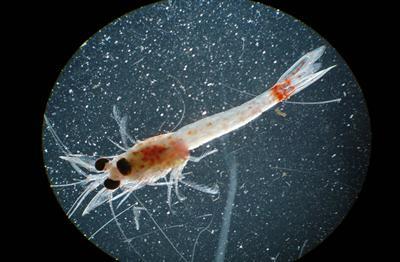
INVASIVE BLOODY RED SHRIMP FOUND IN LAKE SUPERIOR
 MADISON, Wisc.—A single specimen
of the bloody red shrimp (Hemimysis anomala) has been detected in the Lower St.
Louis River near Allouez Bay, Wisconsin, the Wisconsin Department of Natural
Resources (WDNR) and the U.S. Fish and Wildlife Service (Service) announced
today. Sweep net samples were processed and taxonomic identification
completed by Service staff and Badger Technical Services in January
2018.[WRS-D1] This is the first detection of the species in Lake
Superior, which was collected as part of annual sampling done by the Service.
MADISON, Wisc.—A single specimen
of the bloody red shrimp (Hemimysis anomala) has been detected in the Lower St.
Louis River near Allouez Bay, Wisconsin, the Wisconsin Department of Natural
Resources (WDNR) and the U.S. Fish and Wildlife Service (Service) announced
today. Sweep net samples were processed and taxonomic identification
completed by Service staff and Badger Technical Services in January
2018.[WRS-D1] This is the first detection of the species in Lake
Superior, which was collected as part of annual sampling done by the Service.“While the collection of a single individual shrimp suggests this species is not abundant or widespread, it’s a disappointing detection. While the impacts on other Great Lakes are currently unknown, we still want to be cautious about how we approach the management of this species,” said Jeremy Bates, Early Detection and Rapid Response Coordinator with the WDNR.
Bloody red shrimp was first reported in 2006 in Lake Ontario and Lake Michigan, and is already documented in all other Great Lakes. The species, like other invasive species, are known to reproduce and spread, ultimately degrading habitat, out-competing native species and short-circuiting food webs.
“Early detection is crucial to effectively managing invasive animals before they gain a foothold in the environment,” said Amy McGovern, Midwest Aquatic Nuisance Species Coordinator for the U.S. Fish and Wildlife Service. “The discovery of a bloody red shrimp in Lake Superior is a testament to the ongoing importance of the Great Lakes Early Detection and Monitoring Program.”
The Service will continue targeted sampling for bloody red shrimp and other annual AIS sampling throughout the Great Lakes as part of the Great Lakes Early Detection and Monitoring Program.
Boaters and anglers in Wisconsin are asked to do their part to make sure aquatic invasive species (AIS) don’t move to inland waters by taking the following preventive measures:
- Inspect
and thoroughly clean equipment and clothing
- Remove
aquatic plants and debris from boats and equipment
- Drain
water from live wells and bilge compartments before leaving the waterway
- Transport
your catch on ice
Friday, February 9, 2018
Public meetings set for mid-February and early March to update sturgeon management plan
OSHKOSH, Wis. - Wisconsin's oldest fish species - lake sturgeon present when dinosaurs roamed the earth - is set for an updated management plan. Sturgeon lovers can help shape that plan by attending one of eight public meetings statewide in mid-February and early-March.
"Wisconsin's sturgeon team is in the early stages of a process to update the sturgeon management plan and we want to hear from anglers and others interested in sturgeon," says Ryan Koenigs, the sturgeon biologist who leads the Department of Natural Resources sturgeon team. "These meetings provide people an opportunity to comment on the state's sturgeon management program and will set the stage for development of the plan."
Sturgeon facts and history
Lake sturgeon are currently managed under guidance from the 2000 Lake Sturgeon Management Plan. An updated plan will allow DNR staff and partners to continue to build on the previous plan's success, set new goals, and include management strategies for both lake sturgeon and shovelnose sturgeon management. It is important to note that the previous plan did not include shovelnose sturgeon.
Public meeting dates, locations and starting times are listed below:
• Tuesday, Feb. 20 - Eau Claire, 6:30 p.m., DNR Eau Claire Service Center, 1300 W. Clairemont Ave.;
• Tuesday, Feb. 20 - Fitchburg, 6:30 p.m., DNR Fitchburg Service Center, 3911 Fish Hatchery Road;
• Tuesday, Feb. 20 - Webster, 6:30 p.m., Larsen Family Public Library, 7401 W. Main St.;
• Wednesday, Feb. 21 - La Crosse, 6:30 p.m. DNR La Crosse Service Center, 3550 Mormon Coulee Road;
• Wednesday, Feb. 21 - Oshkosh, 6:30 p.m., Coughlin Building, Conference rooms A and B, 625 E County Road Y;
• Wednesday, Feb. 21 - Park Falls, 6 p.m. Public Library, 410 Division St.;
• Tuesday, March 6 - Ashland, 6 p.m. Wisconsin Indianhead Technical College, 2100 Beaser Ave.; and
• Tuesday, March 6 - Oconto, 6 p.m., Oconto City Hall, 1210 Main St.
There also will be future opportunities for people to comment online, and materials prepared for the meetings will be posted online as they become available.
Wisconsin has long been regarded as a national and international leader in sturgeon protection, restoration and research - a reputation built since DNR began regulating sturgeon harvest on the Winnebago system in 1903.
Wisconsin offers a hook-and-line season on multiple major rivers with healthy, growing populations and boasts the world's largest self-sustaining population of lake sturgeon. In locations where sturgeon populations are not as strong, DNR and partners are working to rebuild sturgeon populations.
For more information regarding sturgeon management, visit dnr.wi.gov and search keyword "sturgeon."
"Wisconsin's sturgeon team is in the early stages of a process to update the sturgeon management plan and we want to hear from anglers and others interested in sturgeon," says Ryan Koenigs, the sturgeon biologist who leads the Department of Natural Resources sturgeon team. "These meetings provide people an opportunity to comment on the state's sturgeon management program and will set the stage for development of the plan."
Sturgeon facts and history
Lake sturgeon are currently managed under guidance from the 2000 Lake Sturgeon Management Plan. An updated plan will allow DNR staff and partners to continue to build on the previous plan's success, set new goals, and include management strategies for both lake sturgeon and shovelnose sturgeon management. It is important to note that the previous plan did not include shovelnose sturgeon.
Public meeting dates, locations and starting times are listed below:
• Tuesday, Feb. 20 - Eau Claire, 6:30 p.m., DNR Eau Claire Service Center, 1300 W. Clairemont Ave.;
• Tuesday, Feb. 20 - Fitchburg, 6:30 p.m., DNR Fitchburg Service Center, 3911 Fish Hatchery Road;
• Tuesday, Feb. 20 - Webster, 6:30 p.m., Larsen Family Public Library, 7401 W. Main St.;
• Wednesday, Feb. 21 - La Crosse, 6:30 p.m. DNR La Crosse Service Center, 3550 Mormon Coulee Road;
• Wednesday, Feb. 21 - Oshkosh, 6:30 p.m., Coughlin Building, Conference rooms A and B, 625 E County Road Y;
• Wednesday, Feb. 21 - Park Falls, 6 p.m. Public Library, 410 Division St.;
• Tuesday, March 6 - Ashland, 6 p.m. Wisconsin Indianhead Technical College, 2100 Beaser Ave.; and
• Tuesday, March 6 - Oconto, 6 p.m., Oconto City Hall, 1210 Main St.
There also will be future opportunities for people to comment online, and materials prepared for the meetings will be posted online as they become available.
Wisconsin has long been regarded as a national and international leader in sturgeon protection, restoration and research - a reputation built since DNR began regulating sturgeon harvest on the Winnebago system in 1903.
Wisconsin offers a hook-and-line season on multiple major rivers with healthy, growing populations and boasts the world's largest self-sustaining population of lake sturgeon. In locations where sturgeon populations are not as strong, DNR and partners are working to rebuild sturgeon populations.
For more information regarding sturgeon management, visit dnr.wi.gov and search keyword "sturgeon."
Wednesday, January 10, 2018
Attention Winnebago System Sturgeon Spearing Enthusiasts:
 |
| WCSFO Photo by: John Durben |
The 2018 sturgeon spearing season on Lake Winnebago and
the Upriver Lakes is only a little over a month away, starting on Saturday
February 10. We've experienced some very cold weather the last few weeks
and have some pretty thick ice developed throughout the system. In fact,
some of the local fishing clubs and conservation groups have already put out
their tree lines and are now maintaining access points and plowed
roads. From what I've heard, Lake Winnebago is pretty rough though and
there are quite a few cracks, so be sure to use caution and remember no ice is
every 100% safe.
Many spearers are starting to wonder about water clarity so we had one of our technicians check clarity in a couple of locations today (January 8). Attached is a map of where he checked clarity and what visibility was. In the locations checked, clarity ranged from 7.5-10.5' with quite a bit of variability. This is a very small sample size, but it appears that clarity is not great at this point in time. Hopefully things will improve a bit over the next month. We will be checking clarity again during the week leading up to the season and I will be sure to send out that update once it becomes available.
I also have attached a copy of the spearing rules and regulations for the 2018 season. I hope everyone had a happy holiday season and I look forward to the month of anticipation that lies ahead between now and February 10!
Ryan
Koenigs
Senior
Fisheries Biologist / Winnebago System Sturgeon Biologist
Wisconsin
Department of Natural Resources
625
E County Rd. Y, Suite 700
Oshkosh,
WI 54901
Phone:
(920)303-5450
Fax:
(920)424-4404
Thursday, December 21, 2017
Wisconsin Outdoor Report December 21, 2017
Snow is piling up on properties in northern Wisconsin, but has been melting away in southern counties. The Brule River State Forest is grooming cross-country ski trails after an additional 2-3 inches of snow brought their total to around 10 inches. The Northern Highland-American Legion State Forest is also packing trails for skiers but still has not been able to set tracks. Trails have also been groomed at Newport, Peninsula and Potawatomi state parks in Door County but most of the southern half of the state has no snow cover. A couple more northern counties have opened or partially opened snowmobile trails but conditions are only fair to poor on the Wisconsin Department of Tourism's Snow Conditions Report (exit DNR).

Amnicon Falls will host a New Year Eve candlelight hike with candles leading up to the histoic Horton bride offer views of thee waterfalls.Photo credit: DNR Kevin Feind

A snowy scene along the Brule River.Photo credit: DNR
In the north, many smaller lakes have 4 to 6 inches of ice, but some of the larger lakes just froze up completely in the last week and have only 1 to 4 inches of ice. There is a fair amount of snow on the ice which is leading to slush and inconsistent ice underneath. People should be very careful if they venture out to fish. Anglers finding good ice were catching bluegills in shallow green weeds and crappies a little deeper over flats or near cribs. Walleye anglers are catching walleyes on small minnows set under tip ups on the outside edges of weed beds. Pike action on tip ups has been slower than average.
Southern areas that had been forecast to get several inches of snow this week, will likely now only see a dusting. This means easy access for those looking to get out on a hike this coming week. The last firearm deer hunt is just around the corner in the Farmland Zone--the Holiday hunt runs from Dec. 24-Jan. 1 and is an antlerless only hunt. One last reminder for pheasant hunters: the state game farm will be releasing an additional 1,500 birds on five wildlife areas prior to the holidays for some late season hunting.
There are many mammals moving around, with tracks of grey wolves, fisher, coyotes, and even a black bear were seen around Crex Meadows State Wildlife Area.
Rough-legged hawks have been observed recently in the valleys of Crawford and Vernon counties stocking up on rodents before the coming freeze. These large raptors get their name from their furry-looking legs, which are thoroughly covered to the toes with soft feathers. They breed in the Arctic tundra, but winter primarily in the lower 48 states, where they hunt small mammals on open fields.
Eagles are starting to move in to the Prairie du Sac area and can frequently be seen hunting the Wisconsin River. Other migrants have been seen along the Lake Michigan shoreline in Milwaukee, with scaup, goldeneye, mergansers and even a handful of scoters, long-tailed ducks and harlequin ducks being seen on occasion. The snowy owl count continues to sit at 173 across 57 of Wisconsin's 72 counties as of December 13.
Amnicon Falls will host a New Year Eve candlelight hike with candles leading up to the histoic Horton bride offer views of thee waterfalls.Photo credit: DNR Kevin Feind
Ring in the New Year with a New Year's Eve candlelight hike at Amnicon Falls State Park and then start the New Year off on the right foot by taking part in any of 17 First Day Hikes that will be held at Wisconsin State Park System properties across the state. And get ready for other candlelight events that will begin the first weekend in January with more than 35 events running through early March.
________________________
General | Northern Region | Northeast Region | Southeast Region | South Central Region | West Central Region | Top
Northern Region
Superior DNR Service Center area
A snowy scene along the Brule River.Photo credit: DNR
Brule River State Forest - Happy Winter Solstice! The calendar says Dec. 21 is the first day of winter, but it has looked like winter here for a while now. The area received an additional 2-3 inches of snow the night of Dec. 20, bringing the total on the ground to about 10 inches. The After Hours cross-country ski trails are open and being groomed after this new snowfall. Conditions are good. Trail conditions are kept up to date on skinnyski.com and norwiski.com. Last week temperatures were above freezing, but the temperatures for the weekend are going to be frigid. On Christmas Day, the high temperature is forecast to be at or just below zero. It will definitely be a white Christmas in the Brule River Valley this year. - Diane Gobin, visitor services associate
Pattison State Park - The Pattison State Park Ski Trail was groomed Dec. 20 but track for classic skiing was not laid due to lacking a consistent smooth base. There will be a candlelight hike at Amnicon Falls State Park on New Year's Eve from 4-8 p.m. It is a free event, but a vehicle admission sticker is required. The Friends of Pattison and Amnicon Falls State Parks will be having hot cocoa, cider, and s'mores to enjoy. - Kevin Feind, property supervisor
Hayward DNR Service Center area
Sawyer County - Most smaller lakes have 4 to 6 inches of good ice, but some of the larger lakes just froze up completely in the last week and have 1 to 4 inches of ice. There is a fair amount of snow on the ice which is leading to slush and inconsistent ice underneath. People should be very careful if they venture out to fish. Anglers finding good ice have found the fishing good. Bluegill were biting well both in shallow green weeds (5-10 feet of water) and off of deeper cribs. Walleye are taking minnows on tip-ups on the outside edges of weed beds in 10 to 20 feet of water. Pike action on tip ups has been slower than average, but that might point to good pike fishing in the near future. Pike never seem to stay inactive for long in the winter and can typically be caught in 5-15 feet of water, particularly where there are weeds. - Max Wolter, fisheries biologist, Hayward
Spooner DNR Service Center area
Crex Meadows State Wildlife - Birds are very scarce now in the Grantsburg Area. Recent cold weather and snow have forced most of the remaining migrants out of the area, leaving only the winter inhabitants. There were still a few water birds around this week, including Canada geese, trumpeter swans, mallards, and an American wigeon. Highlights this week were the snowy owls (one spotted on Main Dike Road), red crossbills, and common redpolls. A few large groups of common ravens and wild turkeys were seen over the weekend, as well as a large group of rock pigeons. There were many mammals moving around within the last week as well. Tracks of grey wolves, fisher, coyotes, and even a black bear were seen around Crex Meadows. - Lauren Finch, wildlife educator
Park Falls DNR Service Center area
Price County - Ice development is coming along very slowly on area lakes. Some lakes have 4-6 inches of ice while others have less than 1 inch in spots. Last week's cold spell did not put on as much ice as anticipated. This week's snowfall will insulate the ice and slow any development that is taking place. Extreme caution should be used when venturing out onto the ice. Anglers that have been getting out in the Park Falls area are catching fish. Bluegills are biting in 4-7 feet of water on small jigs with spikes. Crappies are being found a little deeper over flats or near cribs. Minnows with slip bobbers are working well for them. Walleye anglers are catching walleyes in 3 to 6 feet of water on small minnows set under tip ups. Every day has been different as far as action. Somedays they are biting well, somedays they have been very picky. It has been dependent on the weather fronts pushing through. - Chad Leanna, fisheries technician, Park Falls
Flambeau River State Forest - The Flambeau Hills Cross Country Ski Trail has been packed several times in preparation for setting track. There is a base setting up and the snow in the forecast and the cold temperatures will certainly add to that base. The trail is open for skate skiing. Weather pending, the trail will be packed again on Saturday Dec. 23 and groomed the first week of the new year. The snowmobile trail has been groomed and is in use. Hiking trails are open throughout the Forest. As the snow depth mounts, you may only have access with snowshoes. The snow depth is about 7 inches with more in the forecast. Dabbles of ice are flowing down the Flambeau river and the Lake of the Pines and Connors Lake have about 3 inches of ice and a little more along the edges. This Wisconsin winter is going to be a shock for the 30 Kentucky elk and calves released July 6 in the forest. They were originally trapped in 40, 50, and 60 degree Kentucky January weather. However, they're "hard wired" and adapted for the cold. The originator elk for the Kentucky herd came from out west, where subzero cold and blowing snow is common place. Though many of these imports have had it easy they do have the "equipment" to adapt. An elk's winter coat has even greater insulation than a white-tail's winter coat. There are eight timber sales occurring throughout the forest. There will be more starting after the New Year. The weather forecast for the weekend indicates Friday will be mostly cloudy, with a high of 26 and low of 7. Saturday, mostly sunny with a high of 12 and a low of 2. Sunday is forecasted to be mostly cloudy with a chance of snow and a high of 12 and low of -8. Christmas Day will be partly sunny and cold, with a high near -2 and a low of -13. Lake of the Pines Campground and Connors Lake Campground are closed for the season. - Diane Stowell, forestry technician advanced and visitor services associate
Woodruff DNR Service Center area
Oneida County - Anglers have been on the ice for the last couple weeks. Some early reports are that some folks are catching walleyes of decent size. Ice conditions are still variable up here. It's been cold, in the teens, but the amount of steady snow we've had hasn't been the best for making good ice. People are reporting anywhere from 2-8 inches or so depending on lake (smaller lakes tending to have more); however, anybody going out should still exercise caution. - Hadley Boehm, fisheries biologist, Woodruff
Northern Highland-American Legion State Forest - Cross-country ski trails were groomed Dec. 19. All trails have been packed with the groomer but track has not been set. McNaughton has no bare spots but a wet area on the Red/Skaters loop just after leaving the trailhead. Escanaba and Madeline trails have all loops packed with the groomer. Raven Trail is packed with no bare spots but still thin under the conifers on the Red loop by "Hemlock hill" and by Hemlock lake. - Tony Martinez, parks and recreation specialist
________________________
General | Northern Region | Northeast Region | Southeast Region | South Central Region | West Central Region | Top
Northeast Region
Peshtigo DNR Service Center area
Marinette County - About 8-10 inches of snow fell late last week. Warm weather followed and reduced the depth to about 6 inches. More snow is predicted for this week. Some snowmobile trails have been groomed, but remain closed. Ice fisherman have been testing the ice on area lakes. Ice conditions are poor on a number of area lakes with only a couple of inches of ice covered by slush and snow. Some fisherman have reported 5 inches of ice on portions of Lake Noquebay. No permanent shacks have been seen on lakes just yet. The last rifle hunt is just around the corner for the Farmland Zone of the county--the Holiday hunt runs from Dec. 24-Jan. 1 and is an antlerless only hunt. All hunters are reminded to wear blaze orange/pink. Snowy owls have been spotted in southern portions of the county near the Peshtigo River and the bay of Green Bay. - Aaron McCullough, wildlife technician, Wausaukee
Sturgeon Bay DNR Service Center area
Newport State Park - There is about 8 inches of new snow. Trails have been groomed for cross country and skate skiing. We ask hikers and those with snow shoes to please stay off of the tracks. More snow is in the forecast for next week, so conditions could change rapidly. - Beth Bartoli, naturalist
Peninsula State Park - The Blue, Purple, Orange, Red and Yellow cross-country ski trails have been groomed and are in good condition. There are some bare spots and the hills on the Purple Loop are more poor than good due to the rocks. There are small bare spots in the more heavily wooded areas. Reminder: Hiking, snowshoeing, fat tire bikes and pets are not allowed on snow covered ski trails. The sledding hill is currently closed; when it opens only tubes and plastic sleds can be used on the sledding hill. - Jessica Doell, visitor services associate
Potawatomi State Park - The park received about 10 inches of snow on Dec. 13. All ski trails have been tracked. Classic trails are in fair condition since the warm temperatures have caused the tracks to sink to the base of trail in a few spots. The skate skiing trails are in good condition. More snow predicted later this week will improve trails now that there is a base. Please remember that hiking, biking, and pets are not permitted on ski trails when snow-covered. Please see the Potawatomi winter use map [PDF] for trails open to winter hiking and snowshoeing. Bikes may be ridden on park roadways. - Jaclyn Moeri, visitor services associate
Wautoma DNR Service Center area
Waupaca County - Deer have been getting very active during daylight hours. Should be a good opportunity for those who chose to hunt during the holiday hunt. Almost all area lakes iced over, a few people out fishing - have no report on their success. We only had a couple inches of snow on the ground and it got to 40 degrees today. One can only assume there are no trails open. - Karl Kramer, wildlife technician, Wautoma
Waushara County - The area was looking forward to getting some decent snow for Christmas, but now it looks like we will just receive a nice light covering to whiten things back up. That means that the Ice Age Trail will be pretty easy to access for some hiking and other state lands for the upcoming Holiday Hunt. Be prepared to bundle up though as later this weekend the temperatures are about to plummet. Make sure to have some extra layers and be careful when venturing out, the temperatures being forecasted are enough to cause frostbite and hypothermia if out in the cold for too long and not prepared for it. Remember to make a plan and stick to that plan and always let someone know when you plan to be back and where you plan to go! The ice has done OK in the warmup, but still is nowhere near completely safe (as no ice ever is), but the cold will be making more ice every day and ice fishing has been pretty decent as of late. Take care and have a great Holiday. Use this time to get out and enjoy the frigid temps with family! - Ben Mott, conservation warden, Wautoma
________________________
General | Northern Region | Northeast Region | Southeast Region | South Central Region | West Central Region | Top
Southeast Region
Milwaukee DNR Service Center area
Milwaukee County - With the warm winter weather, most of our waterways are currently free of ice. However, we should see cold and snow over Christmas weekend, with more ice cover on our inland lakes and ponds. Our winter migrants are in Milwaukee again, with an abundance of scaup, goldeneye and mergansers, and even a handful of scoters, long-tailed ducks and harlequin ducks being seen on occasion. As of Dec. 13, an estimated 173 Snowy Owls have been tallied across 57 of Wisconsin's 72 counties. Check out the map of recent sightings here. This total puts us on track for one of the largest irruptions in recent years. Visit the snowy owl page at the DNR website for more information. There are antlerless deer bonus carcass tags available for purchase across the state, including in Milwaukee County, and now is the time to take advantage of our archery deer season, which runs through Jan. 31 within our metro subunits and Jan. 8 in the rest of the state. If you already harvested an antlerless deer, you can visit the DNR website to see where in the state additional antlerless carcass tags are available. You can also visit the department website for updated deer harvest information across the state. - Dianne Robinson, wildlife biologist, Milwaukee
Kettle Moraine State Forest, Lapham Peak Unit - The man-made ski trail was groomed Dec. 19 and was in good shape after the grooming. Warm temps will soften the trail as the day goes on. Lights will be on until 9 p.m. Monday through Saturday. Please no hiking on any of the man-made snow, the most damage from hikers occurs with soft snow. - Jay Abts, ranger
________________________
General | Northern Region | Northeast Region | Southeast Region | South Central Region | West Central Region | Top
South Central Region
Fitchburg DNR Service Center area
Columbia County - Snow enthusiasts are still impatiently waiting to get out and enjoy the outdoors. What little snow we had on the ground has mostly melted away in the past few days. Most waterbodies have some level of ice on them and some brave souls have ventured out at Whalen's Grade at Lake Wisconsin and other early ice areas. With the warm temps, animals like raccoons and skunks have been active and moving around more than normal for this time of year. Eagles are starting to move in to the Prairie du Sac area and can frequently be seen hunting the Wisconsin River. Hundreds of cranes were staging in Lewiston and Newport townships at the end of last week and will likely stick around for a bit yet. Hunters at the Mud Lake Wildlife Area between Rio and Poynette are in for a holiday treat - a last 'stocking' of pheasants will occur just before the holidays. Enjoy the rest of the pheasant season! - Sara Kehrli, wildlife biologist, Poynette
________________________
General | Northern Region | Northeast Region | Southeast Region | South Central Region | West Central Region | Top
West Central Region
La Crosse DNR Service Center area
Vernon County - Rough-legged hawks are being observed repeatedly in the area. These large buteos breed in the Arctic tundra and migrate to and winter primarily in the lower 48 states. They feed mainly on small rodents and often hunt for them by facing into the wind and hovering above a grassy field before diving down on the unsuspecting prey. Deep snow cover tends to push the birds farther south. Rough-legged hawks get their name from their furry-looking legs, which are thoroughly covered to the toes with soft feathers. The ferruginous hawk and golden eagle are the only other American raptors that have legs feathered all the way to the toes. For a raptor, rough-legged hawks have relatively small feet and bills. In flight, rough-legged hawks display long, rounded wings, smooth, shallow wingbeats, primary feathers with very pale undersides, and square, dark wrists or carpal patches. These strikingly beautiful birds are often encountered on the open ridgetops or wide valleys in Crawford and Vernon counties. - Dave Matheys, wildlife biologist, Viroqua
Eau Claire DNR Service Center area
Lake Wissota State Park - Species of birds seen or heard include: ravens, black capped chickadees, phoebes, northern juncos, pileated woodpeckers, barred owls and bald eagles. The campground is closed for the winter season. Ice anglers should be thinking about 'gearing up' as first ice has formed in the bays adjacent to the park. Cross country skiers are anxiously waiting additional snowfall as there has not been enough to groom the trails yet.- Dave Hladilek, park manager
Wisconsin Rapids DNR Service Center area
Buckhorn State Park - The trail into the new campground is open for dog walking and is packed when there is enough snow. Mark your calendar for the First Day Hike from 1-3 p.m. on Jan. 1. Meet at the South shelter parking lot to hike or snowshoe. Hot chocolate and cookies after the hike! Bow hunting is happening in the park and wildlife areas until Jan. 7. There is no holiday hunt in the surrounding area. Pets are not allowed on the ski trails when they are groomed. - Heather Wolf, park manager
Roche-A-Cri State Park - The stairway is not maintained in winter and can be icy; it is open from 6 a.m. to sunset. . Bow hunting continues to Jan. 7. All other hunting/trapping is now closed. - Heather Wolf, park manager
Subscribe to:
Posts (Atom)