The Wisconsin Department of Natural Resources is seeking public comment on a proposed waterway and wetland general permit for certain agricultural water quality conservation activities.
"The proposed general permit would allow county, state, and federal agencies to implement water quality conservation practices in agricultural settings through a streamlined permitting process," said Amanda Minks, DNR waterway and wetland policy coordinator.
Several activities can be covered under the proposed general permit so long as they meet the applicable permitting standards and include grassed waterways, filter strips, lined waterways, grade stabilization structures, stream crossings, water and sediment control basins, dams, sediment basins, and constructed wetlands.
"This permit supports conservation work done by partner agencies, including county land conservation department, NRCS and others," Minks said.
DNR does not anticipate this general permit to result in a significant negative effect on the environment. To view a copy of the draft permit or to view other information about the Department of Natural Resources individual and general permitting process, search the DNR website, dnr.wi.gov, for "wetland disturbance."
An informational hearing is also scheduled for Wednesday, March 21, 2-3:30 p.m. in room G09 of the State Natural Resources Building, 101 S. Webster St., Madison. Comments can be submitted to DNRWYWRZGuidance@wisconsin.gov until close of business March 30.
For more information, call Amanda Minks at 608-264-9223 or submit written comments via U.S. mail to Amanda Minks, DNR-WT/3, P.O. Box 7921, Madison, WI 53707-7921.

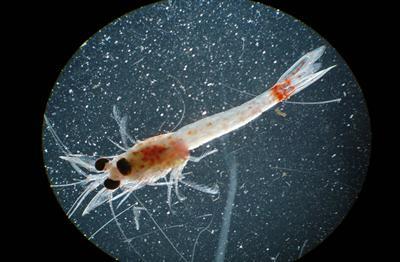 MADISON, Wisc.—A single specimen
of the bloody red shrimp (Hemimysis anomala) has been detected in the Lower St.
Louis River near Allouez Bay, Wisconsin, the Wisconsin Department of Natural
Resources (WDNR) and the U.S. Fish and Wildlife Service (Service) announced
today. Sweep net samples were processed and taxonomic identification
completed by Service staff and Badger Technical Services in January
2018.[WRS-D1] This is the first detection of the species in Lake
Superior, which was collected as part of annual sampling done by the Service.
