The Wisconsin Council of Sport Fishing Organizations (WCSFO) is a statewide organization of Wisconsin Fishing Clubs joined for the purpose of sustaining our valuable resource and our over 15,000 Lakes. We are Fishermen getting Involved...
Tuesday, June 26, 2018
Summer inspectors help boaters prevent the spread of invasive species in Wisconsin's waters
Friday, February 16, 2018
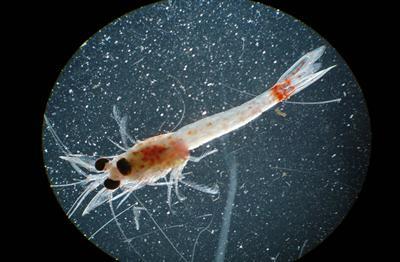
INVASIVE BLOODY RED SHRIMP FOUND IN LAKE SUPERIOR
MADISON, Wisc.—A single specimen
of the bloody red shrimp (Hemimysis anomala) has been detected in the Lower St.
Louis River near Allouez Bay, Wisconsin, the Wisconsin Department of Natural
Resources (WDNR) and the U.S. Fish and Wildlife Service (Service) announced
today. Sweep net samples were processed and taxonomic identification
completed by Service staff and Badger Technical Services in January
2018.[WRS-D1] This is the first detection of the species in Lake
Superior, which was collected as part of annual sampling done by the Service.“While the collection of a single individual shrimp suggests this species is not abundant or widespread, it’s a disappointing detection. While the impacts on other Great Lakes are currently unknown, we still want to be cautious about how we approach the management of this species,” said Jeremy Bates, Early Detection and Rapid Response Coordinator with the WDNR.
Bloody red shrimp was first reported in 2006 in Lake Ontario and Lake Michigan, and is already documented in all other Great Lakes. The species, like other invasive species, are known to reproduce and spread, ultimately degrading habitat, out-competing native species and short-circuiting food webs.
“Early detection is crucial to effectively managing invasive animals before they gain a foothold in the environment,” said Amy McGovern, Midwest Aquatic Nuisance Species Coordinator for the U.S. Fish and Wildlife Service. “The discovery of a bloody red shrimp in Lake Superior is a testament to the ongoing importance of the Great Lakes Early Detection and Monitoring Program.”
The Service will continue targeted sampling for bloody red shrimp and other annual AIS sampling throughout the Great Lakes as part of the Great Lakes Early Detection and Monitoring Program.
Boaters and anglers in Wisconsin are asked to do their part to make sure aquatic invasive species (AIS) don’t move to inland waters by taking the following preventive measures:
- Inspect
and thoroughly clean equipment and clothing
- Remove
aquatic plants and debris from boats and equipment
- Drain
water from live wells and bilge compartments before leaving the waterway
- Transport
your catch on ice
Monday, July 17, 2017
Tiny Quagga Mussels Have Big Impact on Lake Michigan . . . And Perhaps Climate Change
Laodong Guo and his graduate student Stephen
DeVilbiss, researchers at the University of Wisconsin-Milwaukee, looked at the
impacts of quagga mussels from an aquatic chemist’s point of view in a paper
published this year in the Journal
of Great Lakes Research. They took measurements in Lake Michigan and
collected mussels from the lake. They brought the mussels into the lab to
assess filtration and excretion rates, and the type of things excreted to
better understand their role in the lake’s carbon cycle.Wednesday, May 17, 2017
Asian carp would have adequate food to survive in Lake Michigan: USGS study
Thursday, October 8, 2015
Zebra mussels reported on two Minnesota lakes
Lake John has broad infestation; One zebra mussel found on Bryant Lake
The Minnesota Department of Natural Resources has confirmed a report of zebra mussels in Lake John, in Wright County.
A citizen involved in a monitoring program reported a single zebra mussel in late September, but subsequent surveys revealed a more widespread and established infestation throughout much of the lake. The lake is not a candidate for current treatment methods because the infestation is widespread. Lake John has been added to the infested waters list. Other bodies of water connected to Lake John may also be added to the infested waters list after further assessment.
In another case, a single zebra mussel was recently reported in Bryant Lake in Eden Prairie. Three Rivers Park District staff discovered the invasive species on a settlement plate, a simple underwater detection device placed around docks and shorelines, and reported it to the DNR.
Extensive dive searches over the next several days revealed no additional zebra mussels in the lake. DNR invasive species specialist Keegan Lund said Bryant Lake will be carefully monitored the rest of this season and next year, but no treatment is necessary at this time.
The combined efforts of the DNR, lake property owners and lake users to spot and report suspected new infestations increase the chances of treating them or limiting their spread. This time of year it is especially important to check docks, lifts, and other equipment for zebra mussels. By law, docks and lifts must also dry for at least 21 days before putting them into another body of water.
“There is a common misconception that zebra mussels ‘are everywhere’ and that their spread is inevitable. The reality is, zebra mussels have been confirmed in less than two percent of Minnesota lakes, and more Minnesotans than ever before know and follow invasive species laws,” Lund said. “People spread zebra mussels, and people can prevent the spread.”
Before leaving a lake, Minnesota’s aquatic invasive species laws require boaters and anglers to:
- Clean aquatic plants and animals from watercraft.
- Drain all water by removing drain plugs and keeping plugs out while transporting watercraft.
- Dispose of unwanted bait in the trash.
Friday, June 5, 2015
Invasive Species Video Contest Winners
AND THE WINNERS ARE...
Congratulations go out to David Blumer of Barron County for his winning video in the 2015 Invasive Species Awareness Month Video Contest. Check out his video “Oh no! It’s the AIS Monster and His Henchmen!” Congratulations also go to runner up Wes Ison from Oneida Co. for his video “Eurasian Water Milfoil”
Don't forget to join us this week at Olbrich Gardens at 1 p.m. in Madison as we kick off Invasive Species Awareness month with the 11th annual Invader Crusader Award Ceremony, where we will honor Wisconsin citizens and organizations--both volunteer and professional--for their significant contributions to the prevention, management, education, or research of invasive species that harm Wisconsin's land and waters. The award recognizes efforts at all scales--from neighborhoods to statewide parks, lakes and forests. This year, a total of nine awards will be presented to individuals and groups from around the state.
Friday, March 6, 2015
Gobies Compete With Each Other When Crowded, Sparing Native Fishes
March 2, 2015
By Marie Zhuikov
It seems counter-intuitive, but Wisconsin Sea Grant researchers have found that an invasive fish, the round goby, may have greater impacts on native fishes when there are fewer gobies rather than gobs of gobies. The reason? The round goby (Neogobius melanostomus) is so pugnacious and aggressive to their own kind that when numbers are high, they compete among themselves to a greater extent than against native fishes. Round gobies were mostly likely introduced to America in the ballast water of European ships.
University of Wisconsin-Madison Professor Jake Vander Zanden and former Ph.D. student Matthew Kornis and their team published their findings last year in the journal Oecologia. They stocked 18 enclosures in Little Suamico River, a tributary of Lake Michigan in northeastern Wisconsin, with gobies and three species of native fishes (creek chubs, white suckers and Johnny darters).
The enclosures contained the same amounts and types of natural food. The only difference was the numbers of gobies: from “no goby” to “low goby” (2.7 fish per square meter) to “high goby” (10.7 fish per square meter). The fish lived in enclosures made from PVC pipe and plastic mesh for 52 days and were weighed at the beginning and end of the experiment.
The lowest growth rates in the native fishes were in the low-goby enclosures, with Johnny darters and white suckers faring worst. Native fish growth in the high-goby enclosures was no different than in the enclosures without gobies.
“Gobies are super-territorial and they beat up on other gobies in these experimental settings,” said Vander Zanden. “We believe that because they’re spending their time competing with other gobies, their impact on other species is reduced at high densities.”
Vander Zanden said they were surprised by this result “because there’s an implicit assumption that presence corresponds with impacts, and that if you increase an invasive’s abundance, its impact would increase.”
Kornis explained that, “Although this type of finding isn’t entirely new, it has not been shown for an invasive species before in terms of its effect on native species.” He said that in addition to competing for food, gobies, which can spawn up to six times per season, are also intense rivals for mates.
Although the finding is specific to round gobies, Vander Zanden said it addresses broader issues in invasion science. “Don’t always assume that just because something is more abundant that it’s going to have more impact,” he said. This can be helpful to natural resource management agencies. “Understanding how species have different impacts on different ecosystems is helpful in determining where to put our increasingly limited resources so that we get the most bang for the buck,” Vander Zanden said.
This experiment was part of a larger project that looked at the presence and impacts of round gobies in Great Lakes streams. Several years ago, Vander Zanden’s students found gobies in streams that drain into Lake Michigan. “We were just shocked that this species that lives in huge lakes was moving into these tiny little streams because they’re such a different habitat,” Vander Zanden said. “Even in their native range in the Black and Caspian seas in Europe, they only live in large rivers and lakes.”
He set Kornis on the case, who confirmed that the gobies were living and expanding their range upstream every year by a third- to a half-mile. “For a fish that normally has a small home range – like the size of a person’s living room – this is a very rapid range expansion,” Kornis said. He suspects the pressure of living in the higher stream temperatures and finding food, which is relatively less abundant in streams, may be the cause of their spread. “Unlike many native species, round gobies are built to feed on zebra mussels and quagga mussels, which are plentiful in the Great Lakes but usually absent in streams. Gobies in streams must compete with every other fish for the same food,” Kornis said. He developed a simulation model that predicts the gobies’ range expansion in streams.
Saturday, January 17, 2015
Mussel Bound: Researcher Studies Invasives' Role in Spreading Antibiotic-Resistant Genes in Lake Michigan
The millions of zebra and quagga mussels that have colonized the lake concentrate bacteria the same way discharge from wastewater treatment plants does--and provide an environment for ARGs.
January 14, 2015
By Aaron R. Conklin
By this point, we’re aware that the antibiotics and personal-care products we routinely consume to beat back our various and sundry colds and infections have filtered their way through our guts and into Wisconsin’s water supplies, where they’ve had the unintended effect of creating an increasing number of potentially dangerous strains of antibiotic-resistant bacteria.
But what if all those pills and pink liquids aren’t the only factor contributing to the increase? What about the millions of quagga and zebra mussels that have colonized the nearshore waters of Lake Michigan?
Supported by funding from Wisconsin Sea Grant, Dr. Krassimira Hristova, assistant professor of biology at Marquette University, is trying to sketch in another piece of the puzzle by determining how big an impact those mussels may play.
“Most studies on this topic are focusing on the clinical setting,” said Hristova. “There’s not much focus on the environment, on the freshwater ecosystem as part of the equation.”
In urban environments like Milwaukee, scientists have already identified E. coli strains resistant to as many as 11 different antibiotics. They’ve even mapped the mechanism: Heavy concentrations of bacteria contained in the lake sediment near wastewater treatment plants create a four-lane highway for a scientific phenomenon called horizontal gene transfer (HGT). Instead of antibiotic-resistant genes (ARGs) being passed between bacterial cells vertically through the standard process of cell division, they’re being passed through the walls of unrelated bacteria by means of close proximity.
Hristova suspects that a similar phenomenon could be taking place in the guts of the filter-feeding invasive mussels, where bacteria in lakewater concentrates in much the same way it does in the microbiome of a human gut or in the effluent from a treatment plant.
“If we see pollution in the water, do we see the same signal in the mussel gut?” Hristova asked.
To find out, Hristova, Marquette professor of biology James Maki and a research team of students spent most of last summer taking mussel samples from different locations in Lake Michigan where bacterial concentration and mussel presence were likely to be high—places like the inner and outer portions of the Milwaukee Harbor and the headwaters of the Kinnickinnick River. They’re also taking water samples from inland lakes to compare bacterial concentrations in environments that receive different inputs of antibiotics and personal care products.
Back In the lab, it’s easy to depurinate the mussels in a water tank, effectively cleaning their guts of bacteria and creating a blank slate for controlled experiments. Then the team can expose the mussels to a mixture of bacteria including one of the antibiotic-resistant bacteria strains and observe the results.
“How long does the bacteria take to populate their gut?” Hristova asked. “Does the exchange happen in the mussel microbiome, as it does with humans and animals?”
The answers to those questions could go a long way toward determining the mussels’ role in increasing the levels of antibiotic-resistant bacteria in the lake. And could potentially fuel stricter regulations on the types of antibiotic and personal-care products we use.
Hristova’s project has definitely engaged Marquette’s undergraduate students. While only two students helped her gather samples and collect data over the summer, there are now 19 students in the Experimental Microbiology lab class involved in isolating bacteria from mussels and lake sediment and creating assays to determine antibiotic-resistant profiles.
One of those summer students was Kylli Paavola, a senior from Dousman, Wisconsin.
“This was my first real chance to get in a lab and get my hands dirty, she said, “A lot of what we’re doing here is really innovative.”
Paavola had been considering a career in biochemistry, but her experience in Hristova’s lab convinced her to apply for the PhD program in microbiology at UW-Madison, where she’s more likely to be able to hone what she’s learned in the lab and apply it broadly.
“I can really see the applications of this work in the medical field,” she said. “I never really realized how much bacteria there is in the lake water and on the beaches. The abundance is really shocking. Now I think about it every time I visit the beach.”
Ultimately, Hristova would like more people—including scientists and policymakers--to think about it, too.
“It’s not a single part that’s responsible for the problem we’re seeing,” said Hristova. “Every part plays a role. The real question is, how are we changing the ecosystem and what are the consequences of those changes? We’re exposed to this in the environment constantly. We bathe in this water and our kids play in it on the beach all summer long. What are we exposing them to?”
Wednesday, January 7, 2015
Only 1 of 500 Mississippi River samples test positive for invasive carp
Water samples from southeastern Minnesota pools of the Mississippi River that were collected in August and analyzed in December indicate only a small presence of bighead carp eDNA, according to the Department of Natural Resources.
The U.S. Fish and Wildlife Service, in consultation with the DNR, conducted the environmental DNA (eDNA) sampling and analyzing for invasive carp.
A total of 500 samples were tested for both bighead and silver carp DNA in Pool 5a near Winona, Pool 6 in Winona and pools 8 and 9 near the Iowa border. One sample in Pool 8 tested positive for bighead carp, while none of the samples tested positive for silver carp. Results can be viewed on the USFWS Web page: www.fws.gov/midwest/fisheries/eDNA.html.
“The lone positive bighead result appears to support historical, physical catch evidence of low numbers of invasive carp in this stretch of the Mississippi River,” said Nick Frohnauer, DNR invasive fish coordinator. “Individual captures of adult bighead and silver carp have occurred since 2008 but none were captured in these pools in 2014.”
Environmental DNA is a surveillance tool used to monitor for the genetic presence of an aquatic species. The presence of eDNA does not provide physical proof of the presence of live or dead carp, but indicates the presence of genetic material in the water body. This genetic material may be the result of live carp, or transport of only the genetic material via boats or other means.
This is the first time samples were collected in the southeastern Minnesota pools.
Given the low population size at this time, the DNR and USFWS sampled these pools to help guide future traditional sampling efforts and establish a baseline to begin a time series that will help detect population changes. The plan is to collect samples at these and potentially other pools farther north each year.
“It’s important to remember that eDNA is still a new technology and cannot be used to estimate population size at this time,” Frohnauer said. “But the DNR hopes to use this technology to inform field monitoring efforts.”
The USFWS and the DNR will review eDNA results and advancements along with other 2014 monitoring results in planning 2015 sampling.
Monday, December 15, 2014
IL Conservation Police arrest commercial fisherman for sale of live Asian carp
SPRINGFIELD, IL – Illinois Conservation Police have arrested a commercial fisherman for the unlawful possession and sale of 1,800 pounds of live Asian bighead and silver carp. Randall E. Watters of Hamburg, IL was arrested October 7, 2014. He was charged in Calhoun County for the Unlawful Sale of Live Injurious Species (Class 3 Felony) and Unlawful Possession of Live Injurious Species (Class ‘A’ Misdemeanor). Ronald D. Watters of Hamburg, IL was ticketed for possession of live bighead carp.
“Commercial fishermen play a key role in our efforts to control Asian carp, and we make every provision to allow them to deliver fresh product to processing plants,” said Illinois DNR Director Marc Miller. “However, our Conservation Police Officers take the job of preventing the spread of invasive species seriously, and anyone who attempts to transport or sell live Asian carp will be cited.”
Rules governing “injurious” species, such as Asian bighead and silver carp, are designed to curtail the spread of these species. The complete rule can be found here: http://www.ilga.gov/commission/jcar/admincode/017/01700805sections.html. By state law, fish are considered to be live if they are held in a container with water, are held in a solution of salt, electrolyte, or other substance, or combination to promote health or longevity. The fish cannot be maintained by the addition of oxygen or compressed or supplied air to keep them alive in captivity.
A Class 3 Felony is punishable by up to 2-5 years imprisonment plus one-year mandatory supervised release, and up to $25,000 in fines or restitution. A Class A Misdemeanor is punishable by up to one year in prison, fines of up to $2,500, or restitution.
Source: Inland Seas Angler GREAT LAKES BASIN REPORT – GLSFC
Wednesday, November 19, 2014
Letter Concerning Boat Transfer @ Rapide Croche Navigational Lock
Click Here for pdf copy
Tuesday, September 16, 2014
DNR to provide highlights of Lake Michigan comments at Fisheries Forum event
CLEVELAND, Wis. — Leaders from the Wisconsin Department of Natural Resources fisheries team will summarize high priority comments and seek additional feedback on the Lake Michigan Integrated Fisheries Management Plan at Wednesday’s (Sept. 17) meeting of the Lake Michigan Fisheries Forum.
The event, free and open to the public, runs from 6 to 9 p.m. at Lakeshore Technical College, 1290 North Avenue, Cleveland, Wis. The meeting will be in the Cleveland Training Room.
The Lake Michigan Integrated Fisheries Management Plan will guide fisheries management of the lake for the next 10 years. While much has been accomplished through the previous 10 year plan, major ecological changes including the arrival and proliferation of aquatic invasive species such as the quagga mussel have made the lake less productive.
Input from anglers and other stakeholders is critical in developing the plan and the public comment period has been extended. Brad Eggold, Lake Michigan fisheries supervisor, said the Fisheries Forum meeting will provide an opportunity to discuss the high priority comments already received and solicit additional feedback.
“The Lake Michigan Fisheries Forum’s connection with the Sea Grant Institute provides an opportunity for participants to share their wealth of knowledge about the lake,” Eggold said. “We anticipate the Fisheries Forum members will offer some innovative insights into the opportunities and challenges ahead.”
The Lake Michigan Fisheries Forum provides members with the latest in research, management news and trends affecting the lake. The forum is facilitated by the University of Wisconsin Sea Grant Institute and operates independently from DNR. Representatives from major sport fishing clubs on Lake Michigan and Green Bay, commercial fishers, the Conservation Congress and the University of Wisconsin System are formal members of the forum. Meetings are open to the public.
Comments on the Lake Michigan Integrated Fisheries Management Plan can be sent by email to DNRLakeMichiganPlan@wisconsin.gov or by mail to: Wisconsin DNR, Attn: David Boyarski, 110 S. Neenah Ave., Sturgeon Bay, WI 54235. Details of the plan can be found on the DNR website, dnr.wi.gov by searching for keywords "Lake Michigan plan."
Tuesday, July 8, 2014
Sea Grant Helping Prevent the Spread of Aquatic Invasive Species in Wisconsin Waters
In 2013, 13,000 People Heard Clean, Drain, Dry Messages; Inspectors Are On Pace to Talk With That Many People This Summer at Great Lakes Boat Landings
July 8, 2014
With the Fourth of July holiday now behind summer-lovers, perhaps it feels as if the recreational boating season is really revving up. That could lead to the inadvertent spread of aquatic invasive species from one water body to another. Sea Grant, however, is doing its part to help prevent that spread this summer by putting in place a boat landing inspector on the Great Lakes.
When a plant or animal hitches a ride on a recreational boat from one habitat to another, and flourishes, it could disrupt the health and well-being of the species already in that spot. In Wisconsin, some problematic aquatic invasive species are Eurasian milfoil, which crowds out native plants, and spiny water fleas and quagga mussels. The waterfleas and mussels eat a lot of the virtually microscopic organisms on the lower end of the food chain, denying other creatures a meal.
Boat landing inspectors approach boaters as they leave the lake and educate them on the best way to avoid transporting creatures like Eurasian watermilfoil and spiny waterfleas to inland lakes. That’s done by sharing the messages of inspecting the boat for hitchhiking plants and animals, then, suggesting that boaters clean, drain and dry their boats before going into the water again. The ultimate message is one of education on the impacts these non-native species can have on the invaded waterbodies.
There are nine summer 2014 employees who work 20 hours a week—weighted more heavily to weekends when more people are boating.
The inspectors record boaters’ answers (keeping the sources anonymous) about their inspecting, cleaning, draining and drying practices on a form that is sent electronically to the Wisconsin Department of Natural Resources (DNR) for processing. In 2013, Sea Grant inspectors reached nearly 13,000 people and checked about 6,000 boats for AIS.
“We can’t force people to talk with us,” said Titus Seilheimer, Wisconsin Sea Grant’s fisheries specialist and the one who oversees the seasonal boat inspectors. “The inspectors are there for education, not enforcement. We want to get people to the point of: Do they understand why this (aquatic invasive species removal) is important. You want it to be more than them just saying ‘yes’ because a boat landing inspector is standing there staring at you. We won’t always be there so they need to make clean, drain, dry and never move a part of their routine.”
Seilheimer is refining the inspection and education process this year. With help from a group of county-based and DNR personnel, he has reworked the script to, for example, acknowledge when an individual boater may have already spoken with an inspector earlier in the season. “In general, people appreciate what the inspectors are doing. It can get a bit old, though, later in the season if they have talked to someone three times and they’re being approached for a fourth time,” Seilheimer said.
There are some successes from the effort. Quagga mussels, which number in the trillions in Lake Michigan, have not made it to inland lakes in any appreciable—and destructive—way.
Thursday, May 22, 2014
DNR: Protect yourself and Minnesota waters
After a long winter, Minnesotans are ready to hit the water for the official start of the boating season — Memorial Day. The Department of Natural Resources is reminding everyone to protect themselves and state waters.
“Think zero — zero aquatic invasive species violations, zero new infestations and zero boating deaths,” said Lt. Adam Block, DNR conservation officer.
DNR inspectors working at public accesses around the state have found that most people are following aquatic invasive species (AIS) laws. But already this year they have stopped over 40 boaters who were entering or leaving lakes with zebra mussels attached to boats or equipment.
And so far this year, one person has died in a boating accident. Last year, 13 people died in boating accidents. If all boaters in Minnesota wore life jackets, 10 lives could be saved each year.
“Minnesota’s lakes and rivers are precious resources and we are asking people to do their part; wear a life jacket every time you step on a boat and always clean and drain your boat, so everyone can continue to enjoy our waters,” Block said.
More than 500 Minnesota — rivers, lakes, wetlands — are designated as infested with AIS. That leaves more than 10,000 bodies of water to protect.
A few simple steps can make a big difference from a good day on the water to a bad day.
Boaters should always wear a U.S. Coast Guard-approved life jacket.
Before leaving a water access, boaters are required to:
- Clean off all aquatic plants and animals.
- Drain all water from bilge, livewell and baitwell by removing drain plugs.
- Leave the drain plug out when transporting.
- Empty bait buckets and dispose of unwanted live bait in the trash.
Public comment period open for invasive species rule changes
MADISON - A proposal to add more than 80 new species to the list of restricted and prohibited invasive species in Wisconsin is now open for public comment and will be the subject of two public hearings to be held in June. The comment period is open until June 30, 2014.
In April, the state Natural Resources Board approved a request from the Department of Natural Resources to take proposed revisions to the state's invasive species rule, Chapter NR 40 of the Wisconsin Administrative Code, to public hearings. Revisions include adding the new species to the list and changing the regulatory status of several species including emerald ash borer for the state.
Currently, the emerald ash borer, a beetle, responsible for the destruction of tens of thousands of ash trees in Wisconsin, is classified as a prohibited species. Under the rule, prohibited species are those that are not widespread in the state and whose spread can be prevented or limited to certain areas using eradication methods. Since the first discovery of EAB in Wisconsin in 2008, and its listing as a prohibited species in 2009, it has spread to 19 counties prompting a proposal to change EAB regulatory status to restricted.
Restricted species are those already found in the state and may be more widespread. Eradication is improbable but the spread can still be managed. Measures to manage the spread of EAB will still be used, such as Department of Agriculture, Trade and Consumer Protection quarantines and DNR firewood transportation restrictions. Under the proposed revisions to NR 40, possession is not prohibited and control is not required for restricted species.
The proposed rule and supporting documents, including the fiscal estimate, may be viewed and downloaded from the Administrative Rules System website.
The public hearings will be held:
- Tuesday, June 17, Madison - 4 p.m. in the State Natural Resources Building, 101 S. Webster St., Room G09. The public hearing in Madison will be webcasted live for those who are unable to participate in person. To request a webcast link, please contact Terrell Hyde by noon on June 16, 2014 at invasive.species@wisconsin.gov or call 608-264-9255.
- Wednesday, June 18, Green Bay - 4 p.m. at the DNR Green Bay Service Center, 2984 Shawano Ave., Lake Michigan Room.
Wisconsin, other Great Lakes states team up to fight aquatic invasive species
CHICAGO - A tri-state public service announcement is just the latest example of Wisconsin teaming up with neighboring states to help prevent the spread of aquatic invasive species.
While Wisconsin continues to work with its partners at home to meet the challenges of aquatic invasive species in its inland waters, the state is forging ahead with new regional efforts aimed at pooling resources and efforts to better and more efficiently protect the Great Lakes from new invaders, state environmental officials say. In turn, those efforts will better protect inland waters as well.
"Stopping aquatic invasive species
is all about shutting down pathways and it must be a focus for our nation, the Great Lakes region and Wisconsin," says Department of Natural Resources Water Administrator Russ Rasmussen. "This is something we can all unite behind. Together, we can work smarter, more efficiently, and more effectively to achieve our common goals."
Examples of such recent regional collaboration include:
- Wisconsin and other states are working together to apply for federal funding to develop an interstate effort to systematically look for, and respond to, early signs of new invasive species within the Great Lakes themselves. Federal agencies like the U.S. Fish & Wildlife Service and the U.S. Environmental Protection Agency now have some monitoring efforts underway but the states aim to increase the level of monitoring of the Great Lakes.
- Late last month, Gov. Scott Walker and counterparts from other Great Lakes states signed a mutual aid agreement [PDF] committing the states to share staff and equipment to respond quickly to serious threats to the basin from aquatic invasive species and to encourage more cooperative actions to combat aquatic invasive species.
- Earlier this spring, Wisconsin and other states called on the U.S. Army Corps of Engineers to implement immediate interim steps to keep Asian carp out of the Great Lakes and committed themselves to work together to reach a consensus for long-term actions.
Wisconsin has for decades been working with states and federal agencies involved in managing the Mississippi River and Great Lakes to address aquatic invasive species, including keeping Asian carp from getting established in the Upper Mississippi River and in the Great Lakes. The two basins are artificially connected through the Chicago waterway system.
The new regional efforts are aimed at protecting these regionally important waters from Asian carp and other new invasive species and by default, will better protect states' inland waters as well, says Bob Wakeman, DNR's aquatic invasive species coordinator.
Since the 1800s, more than 180 aquatic invasive species have been documented in the Great Lakes, and 30 of those species have been spread to Wisconsin inland waters. Wisconsin research has shown that boaters are the primary way that aquatic invasive species spread from one water to another.
Wisconsin, Michigan, Minnesota launch campaign to prevent spread of aquatic invasive species
MADISON - Wisconsin, Michigan and Minnesota share many of the same boaters and anglers - now they're sharing the same message to help protect their iconic waters from aquatic invasive species such as Eurasian water-milfoil, zebra mussels and spiny water fleas.
The states are teaming up on a new public service campaign to help carry a consistent message encouraging boaters and anglers to take steps to avoid accidentally spreading zebra mussels, spiny water fleas and other invasive aquatic species when they travel among states. A 30-second television spot
(Click Here to see 30-second television spot)
"We share a common goal of stopping aquatic hitchhikers to keep our Great Lakes and our inland waters healthy," says Department of Natural Resources Secretary Cathy Stepp. "By pooling our resources we can help reach more people with an important reminder as they travel back and forth."
Minnesota Department of Natural Resources Commissioner Tom Landwehr says the Minnesota DNR "welcomes every opportunity to work with other states on AIS prevention measures and this multi-state production is a fitting example. It offers a consistent message and a coordinated approach to effectively address the tough issue of AIS."
Michigan Department of Environmental Quality Director Dan Wyant invites partner organizations and individuals to share the video to spread awareness. "We encourage boaters to take action by cleaning equipment to prevent the spread of invasive species in our states."
Wisconsin and other Great Lakes states have been increasingly trying to work across the region to meet the challenges of invasive species, nonnative species that can cause environmental or economic harm or harm to human health. Outreach was fertile ground for such cooperation, says Bob Wakeman, who coordinates aquatic invasive species efforts for the Wisconsin Department of Natural Resources and who had the idea for the tri-state public service message.
"With the help of our partners and on-site recruiting, we were able to capture a wide diversity of people who enjoy our waters," Wakeman says. "We think it's one of the strengths of the video: seeing and hearing average Wisconsinites, Minnesotans and Michiganders on why they love their waters and why it's important to protect them."
Marjorie Casey, Minnesota DNR aquatic invasive species information officer, says the multi-state public service announcement "is a good reminder for everyone to read and understand local AIS laws wherever they travel.
"The prevention requirements are slightly different across the three states, and the AIS laws for each state are available online."
- Wisconsin's prevention rules
- Michigan's prevention rules
- Minnesota's prevention rules
Michigan's Wyant says that by taking a few minutes to clean boats, trailers, and other fishing equipment and drain water from their boat and fishing equipment, "we can all help keep our Great Lakes healthy and protect our inland waters."
MN researchers plan on fighting Asian carp with underwater speakers
Researchers at the U. of Minnesota have a bold plan to use sound to contain the spread of Asian carp in the Mississippi River. According to WCCO 4, the Minnesota Aquatic Invasive Species Research Center intends to place underwater speakers in key sections of the Mississippi River, but they have to act fast.
“Just a few months ago, it was announced, somewhat surprisingly, that their eggs were just found south of the Minnesota border,” said Peter Sorenson, a University of Minnesota professor and director of the center. Sorenson’s plan is to install the acoustic barriers at Lock and Dam Number 8 near Genoa, Wisconsin. The center is now scrambling for funds to build the custom speakers, estimated to cost $60,000, before the carp arrive. In March, scientists from the US Geological Survey (USGS) announced that Asian carp have penetrated as far north in Wisconsin as Lynxville, which is about 150 miles from Genoa. Since acoustic barriers only deter carp rather than kill them, researchers will have to work fast to get the speakers in place before the invasive fish pass the barrier.
Asian carp have spread quickly since the species first arrived in the Mississippi River in the late 1960s. The fish can now be found in 31 states and are considered to be highly detrimental to native fish and plant life. Carp have very good hearing, up to 100 times better than some other fish species. This is especially true of bigheaded carp, which are easily disturbed by changes in water flows. The underwater speakers work by emitting a low-frequency sound in conjunction with high velocity water jets that repel Asian carp. Sorenson’s team is not the only group of researchers studying acoustic tools to use against the fish; the USGS’s Northern Rocky Mountain Science Center is also developing its own sound barriers.
Researchers admitted that sound barriers are not guaranteed to stop Asian carp in their tracks, but said the technology compliments other deterrence methods well. More traditional barriers include screened flow gates, electric barriers, and fish-killing treatment plants. The center is currently accepting donations.
Source: Great Lakes Basin Report –(Great Lakes Sport Fishing Council)
Thursday, May 15, 2014
DNR partnership expands invasive carp monitoring and detection
The Minnesota Department of Natural Resources, in partnership with the U.S. Fish and Wildlife Service, U.S. Geological Survey, and Minnesota Aquatic Invasive Species Research Center (MAISRC), will begin comprehensive monitoring and detection of bighead, black, grass, and silver carp in Minnesota waters this year. Currently, small numbers of bighead, grass, and silver carp are present in Minnesota.
The goal of monitoring is to better understand the current status of invasive carp in the waters of Minnesota where habitat may allow them to establish self-sustaining populations. Detecting invasive carp in Minnesota waters is challenging because their numbers are low and they are difficult to catch using traditional sampling equipment.
The DNR employs a variety of techniques to gather data about invasive carp, including: commercial fishing contracts, targeted field sampling, eDNA (genetic surveillance), and telemetry. Detecting individual fish and observing changes in overall population, helps inform management efforts and identify ways to prevent the spread of invasive carp.
“These efforts are an important element of the Minnesota invasive carp action plan, because invasive carp species are not yet established in Minnesota,” said Nick Frohnauer, DNR invasive fish coordinator. “Expanding our knowledge of their presence and population dynamics is important to establish timelines and direct deterrence measures.”
Previous monitoring efforts for these invasive carp were focused on the Mississippi River from Hastings to Coon Rapids, St. Croix River to Taylor’s Falls, and the mouth of the Minnesota River. These efforts, combined with additional data from Iowa and Illinois, indicate that for the Mississippi River, the leading edge of established populations of bighead and silver carp is in northern Iowa. As a result, the DNR and partner agencies plan to:
- Expand sampling into Mississippi River Pools 5a, 6, and 8 (in southeastern Minnesota).
- Conduct detection surveys of invasive carp on the Minnesota River while also gathering baseline data on native aquatic communities.
- Maintain sampling stations established on southwestern Minnesota rivers and streams to detect if invasive carp expand into Minnesota via the Missouri River.
- Continue collaborating with MAISRC on collecting water samples from Lock and Dam 1, Lock and Dam 5, and Taylor’s Falls for future analysis.
The DNR is also working on or supporting additional projects to deter the expansion of invasive carp into Minnesota, including: St. Anthony Falls, Lock and Dam 1, Mississippi River Lock and Dams 2, 5, and 8 (MAISRC research locations), and southwestern Minnesota.
Thursday, May 1, 2014
‘Think Zero’ at fishing opener
-
Clean aquatic plants and animals off boats, trailers and water-related equipment. It is illegal to transport them whether dead or alive.
-
Drain water-related equipment (boat, ballast tanks, portable bait container, motor) and drain bilge, livewell, and baitwell by removing drain plugs.
-
Keep drain plugs out and water draining devices open while transporting watercraft.
-
Dispose of unwanted bait in the trash.
With more than 500,000 people expected take part in the walleye and northern pike season opener on Saturday, May 10, the Minnesota Department of Natural Resources urges every angler to make a commitment to transport zero aquatic invasive species (AIS) this year.
Invasive species can be easily carried from one lake to another if aquatic plants and water are left on a boat or trailer. By taking a few simple precautions anglers can minimize the risk of spreading aquatic invasive species such as zebra mussels, Eurasian watermilfoil and spiny waterfleas.
Zebra mussels pose serious ecological and economic threats to Minnesota’s lakes and streams. Heavy infestations can kill native mussels, impact fish populations and interfere with recreation.
“If we can reach our goal of zero AIS violations this year, it’s possible we can end the season with zero new infestations caused by human activity,” said Maj. Phil Meier, DNR Enforcement operations manager.
Conservation officers wrote more than 400 AIS citations at public water accesses last year. To help bring that number to zero, the DNR plans to increase AIS prevention activities this year.
“We now have more than 1,000 lake service providers trained and permitted in AIS prevention,” said Ann Pierce, section manager, DNR Ecological and Water Resources Division. “We’re also expanding the AIS volunteer educator program, and plan to have more people at public access sites with information on how to prevent the spread of invasive species.”
In addition, 100 more clean-and-drain areas will open at public water accesses statewide. These special areas provide safe and convenient places for boaters to clean and drain their boats.
To avoid a citation, anglers must take these steps required by law before leaving any water access or shore:
-
Spray with high-pressure water.
-
Rinse with very hot water (120° for 2 minutes or 140° for 10 seconds).
-
Dry boat and equipment for at least five days.
Some aquatic invasive species are small and difficult to see at the access. To remove or kill them before moving to another body of water, especially after leaving zebra mussel and spiny waterflea infested waters, the DNR recommends that anglers either:
“And, if doing the right thing isn’t enough of an incentive,” Meier said, “be aware that we’ll have more enforcement check stations near public waters this summer. Anglers and boaters can expect to be checked and cited by a conservation officer if found in violation of AIS laws.”
Citations range from $50 to $1,000.
More information, including a new 30-second public service announcement about stopping the spread of aquatic invasive species, is available at www.mndnr.gov/AIS.