Showing posts with label WDNR News Release. Show all posts

Thursday, April 26, 2018

Draft proposal to remove Lower Menominee River Area of Concern Restrictions on Fish Consumption available for public review and comment


After nearly 30 years of cleanup and remediation efforts, the Wisconsin and Michigan Departments of Natural Resources are seeking public comment on our joint recommendation to remove the listed impairment for Restrictions on Fish Consumption from the Lower Menominee River Area of Concern (AOC). A draft proposal is now available for public review that summarizes the remediation actions taken and results of follow-up testing that indicate AOC targets are being met. The proposal also includes documentation of stakeholder involvement in this process.

Anyone wishing to review the proposed impairment removal document can find it here:
Restrictions on Fish Consumption Impairment Removal Proposal (PDF)

Information about the Lower Menominee River Area of Concern is available at this link.
Comments can be submitted to Vic Pappas, Lake Michigan Field Supervisor, at Victor.Pappas@Wisconsin.gov until May 18, 2018 at 5:00 p.m. Questions about the BUI removal may be directed to Mr. Pappas or to the Michigan DNR Area of Concern Coordinator, Stephanie Swart, at 517-284-5046 or by e-mail at swarts@Michigangov.

The removal proposal is made by the Wisconsin DNR Office of Great Waters, Michigan DNR Office of the Great Lakes and supported by the Lower Menominee River AOC Technical and Citizens Advisory Committees. Sediment removal, cleanup projects and other changes have reduced pollutants within the boundaries of the Area of Concern and existing advisories relate to pollution coming from outside of the AOC.

It’s important to note that while the area of concern is no longer a source of certain pollutants that have been found in fish, pollution is still coming from outside the area. As a result, advice about eating fish should still be followed This advice can be found at: https://dnr.wi.gov/fcsexternaladvqry/fishadvisorysrch.aspx.

To learn more visit http:/dnr.wi.gov/ and search “AOC.”

Friday, April 13, 2018

2018 Peshtigo River State Forest work plan posted for public comment


The 2018 integrated property management meeting minutes and work plan for the Peshtigo River State Forest have been posted for public review, questions or comments.  These documents can be found on the ‘Management and Business' tab of the Peshtigo River State Forest home page.
Comments on the minutes are due by April 30, 2018 and should be directed to:
Avery Jehnke, Property Manager
Peshtigo River State Forest
N10008 Paust Lane
Crivitz, WI 54114
715-757-3965

Forest staff dealt with record rainfall and several staffing vacancies in 2017 but managed to move forward with projects, recreation operations and establish and administer timber sales, which generated approximately $181,000 in stumpage revenue during 2017.
The state forest team will have a new look in 2018. Three vacancies have been filled, including a property manager/forester and two rangers who will support recreation operations on the state forest.
The 2018 work plan includes four timber sales prepared for bidding in 2018 and several areas to be evaluated for future timber harvest.  Other projects planned include boat landing improvements, opening of a new golf cart trail, invasive species control and road work in high-use areas.

Thanks for your interest in the Peshtigo River State Forest,
Avery

Friday, April 6, 2018

Potawatomi State Park observation tower permanently closed


Significant wood decay requires tower to be dismantled

STURGEON BAY, Wis. - Significant wood decay has been found in the observation tower located at Potawatomi State Park creating unsafe conditions and requiring removal of the tower. The Wisconsin Department of Natural Resources has permanently closed the tower, which has been closed for the winter season since last December.

A similar tower located at Peninsula State Park was removed in 2016 after studies found severe wood decay in that tower as well.

Routine inspections of the Potawatomi tower were conducted in the spring and early winter of 2017. During these inspections park staff found visual decay and movement of the structural wood tower members. DNR engineering staff were brought in and conducted additional inspections and recommended further review.

The DNR then again requested assistance from the USDA Forest Service Forest Products Laboratory in Madison, which had gained valuable experience from their inspection of Eagle Tower at Peninsula. Forest Product Laboratory staff conducted an inspection in February 2018 using non-destructive wood-testing methods to examine the wood members and the structural integrity of the tower. Their inspection found significant decay in the structural and non-structural wood members of the tower, and they recommended that the tower be closed to the public and dismantled because the decayed components could not be repaired.

"This is a difficult decision for us because we know how much our visitors enjoy climbing this tower for its panoramic views of Sawyer Harbor, Sturgeon Bay and Green Bay, but public safety is always our number one concern," said Ben Bergey, director of the Wisconsin State Park System.

The department is currently working with a number of partners to build a new fully accessible observation tower at Peninsula State Park to replace Eagle Tower that will be constructed in late 2018.

The 75-foot tall Potawatomi tower was completed in 1932. It was financed by an organization known as the Sawyer Commercial Club, which promoted economic development in the Village of Sawyer, the original name for Sturgeon Bay's west side before it was annexed in the late 1800s.
"At this time there are no plans to replace the tower, but we welcome opportunities to work with partners to provide additional recreation opportunities at the park, which could include new observation facilities in the future," Bergey said.

Any new structure would have to meet state and federal building codes and be fully ADA compliant and accessible.

The department will begin planning deconstruction of the tower immediately with the intention to complete it as soon as practicable.

Friday, February 16, 2018

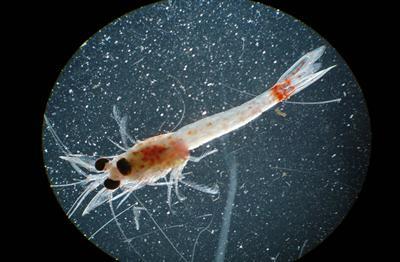
INVASIVE BLOODY RED SHRIMP FOUND IN LAKE SUPERIOR


Bloody Red ShrimpMADISON, Wisc.—A single specimen of the bloody red shrimp (Hemimysis anomala) has been detected in the Lower St. Louis River near Allouez Bay, Wisconsin, the Wisconsin Department of Natural Resources (WDNR) and the U.S. Fish and Wildlife Service (Service) announced today.  Sweep net samples were processed and taxonomic identification completed by Service staff and Badger Technical Services in January 2018.[WRS-D1]  This is the first detection of the species in Lake Superior, which was collected as part of annual sampling done by the Service.

“While the collection of a single individual shrimp suggests this species is not abundant or widespread, it’s a disappointing detection.  While the impacts on other Great Lakes are currently unknown, we still want to be cautious about how we approach the management of this species,” said Jeremy Bates, Early Detection and Rapid Response Coordinator with the WDNR. 
Bloody red shrimp was first reported in 2006 in Lake Ontario and Lake Michigan, and is already documented in all other Great Lakes.  The species, like other invasive species, are known to reproduce and spread, ultimately degrading habitat, out-competing native species and short-circuiting food webs.
“Early detection is crucial to effectively managing invasive animals before they gain a foothold in the environment,” said Amy McGovern, Midwest Aquatic Nuisance Species Coordinator for the U.S. Fish and Wildlife Service. “The discovery of a bloody red shrimp in Lake Superior is a testament to the ongoing importance of the Great Lakes Early Detection and Monitoring Program.”
The Service will continue targeted sampling for bloody red shrimp and other annual AIS sampling throughout the Great Lakes as part of the Great Lakes Early Detection and Monitoring Program. 
Boaters and anglers in Wisconsin are asked to do their part to make sure aquatic invasive species (AIS) don’t move to inland waters by taking the following preventive measures:

  • Inspect and thoroughly clean equipment and clothing
  • Remove aquatic plants and debris from boats and equipment
  • Drain water from live wells and bilge compartments before leaving the waterway
  • Transport your catch on ice

Friday, February 9, 2018

Public meetings set for mid-February and early March to update sturgeon management plan

OSHKOSH, Wis. - Wisconsin's oldest fish species - lake sturgeon present when dinosaurs roamed the earth - is set for an updated management plan. Sturgeon lovers can help shape that plan by attending one of eight public meetings statewide in mid-February and early-March.

"Wisconsin's sturgeon team is in the early stages of a process to update the sturgeon management plan and we want to hear from anglers and others interested in sturgeon," says Ryan Koenigs, the sturgeon biologist who leads the Department of Natural Resources sturgeon team. "These meetings provide people an opportunity to comment on the state's sturgeon management program and will set the stage for development of the plan."

Sturgeon facts and history

Lake sturgeon are currently managed under guidance from the 2000 Lake Sturgeon Management Plan. An updated plan will allow DNR staff and partners to continue to build on the previous plan's success, set new goals, and include management strategies for both lake sturgeon and shovelnose sturgeon management. It is important to note that the previous plan did not include shovelnose sturgeon.

Public meeting dates, locations and starting times are listed below:

• Tuesday, Feb. 20 - Eau Claire, 6:30 p.m., DNR Eau Claire Service Center, 1300 W. Clairemont Ave.;
• Tuesday, Feb. 20 - Fitchburg, 6:30 p.m., DNR Fitchburg Service Center, 3911 Fish Hatchery Road;
• Tuesday, Feb. 20 - Webster, 6:30 p.m., Larsen Family Public Library, 7401 W. Main St.;
• Wednesday, Feb. 21 - La Crosse, 6:30 p.m. DNR La Crosse Service Center, 3550 Mormon Coulee Road;
• Wednesday, Feb. 21 - Oshkosh, 6:30 p.m., Coughlin Building, Conference rooms A and B, 625 E County Road Y;
• Wednesday, Feb. 21 - Park Falls, 6 p.m. Public Library, 410 Division St.;
• Tuesday, March 6 - Ashland, 6 p.m. Wisconsin Indianhead Technical College, 2100 Beaser Ave.; and
• Tuesday, March 6 - Oconto, 6 p.m., Oconto City Hall, 1210 Main St.

There also will be future opportunities for people to comment online, and materials prepared for the meetings will be posted online as they become available.

Wisconsin has long been regarded as a national and international leader in sturgeon protection, restoration and research - a reputation built since DNR began regulating sturgeon harvest on the Winnebago system in 1903.

Wisconsin offers a hook-and-line season on multiple major rivers with healthy, growing populations and boasts the world's largest self-sustaining population of lake sturgeon. In locations where sturgeon populations are not as strong, DNR and partners are working to rebuild sturgeon populations.

For more information regarding sturgeon management, visit dnr.wi.gov and search keyword "sturgeon."

Wednesday, January 10, 2018

Attention Winnebago System Sturgeon Spearing Enthusiasts:

WCSFO Photo by: John Durben

The 2018 sturgeon spearing season on Lake Winnebago and the Upriver Lakes is only a little over a month away, starting on Saturday February 10.  We've experienced some very cold weather the last few weeks and have some pretty thick ice developed throughout the system.  In fact, some of the local fishing clubs and conservation groups have already put out their tree lines and are now maintaining access points and plowed roads.  From what I've heard, Lake Winnebago is pretty rough though and there are quite a few cracks, so be sure to use caution and remember no ice is every 100% safe.

Many spearers are starting to wonder about water clarity so we had one of our technicians check clarity in a couple of locations today (January 8).  Attached is a map of where he checked clarity and what visibility was.  In the locations checked, clarity ranged from 7.5-10.5' with quite a bit of variability.  This is a very small sample size, but it appears that clarity is not great at this point in time.  Hopefully things will improve a bit over the next month.  We will be checking clarity again during the week leading up to the season and I will be sure to send out that update once it becomes available.

I also have attached a copy of the spearing rules and regulations for the 2018 season.  I hope everyone had a happy holiday season and I look forward to the month of anticipation that lies ahead between now and February 10!
  
Ryan Koenigs
Senior Fisheries Biologist / Winnebago System Sturgeon Biologist
Wisconsin Department of Natural Resources
625 E County Rd. Y, Suite 700
Oshkosh, WI 54901
Phone: (920)303-5450
Fax: (920)424-4404

Thursday, December 14, 2017

Wisconsin Walleye Initiative funding boosts state and private production

MADISON - A record 881,977 walleye were stocked in key Wisconsin waters this past year as state, private and tribal hatcheries continued to put Wisconsin Walleye Initiative funding to work for anglers, state fisheries officials said.

"We're very pleased that the investment made to hatcheries through the Wisconsin Walleye Initiative and the hard work of our fisheries crews and our partners are once again paying off for Wisconsin anglers," says Justine Hasz, fisheries director for the Department of Natural Resources.
State fish crews collecting extended growth walleye from the Art Oehmcke State Fish Hatchery near Woodruff. - Photo Credit: DNR
State fish crews collecting extended growth walleye from the Art Oehmcke State Fish Hatchery near Woodruff.
Photo Credit: DNR
The initiative, proposed by Gov. Scott Walker with the 2013-15 biennium budget and approved for continuation through the 2017-19 budget, has paid to upgrade state hatcheries and provided extra operating funds needed to keep fish on site longer and feed them minnows. The initiative also provided grants to upgrade three tribal hatcheries and six private facilities to meet the stocking demand statewide.
"We stocked a record number of fish again, meeting the need identified by fisheries biologists and we're poised to meet the needs long into the future for walleye stocking using public and private partnerships," says Dave Giehtbrock, DNR fisheries culture section chief.
Natural reproduction accounts for more than 80 percent of the walleye caught in Wisconsin. The Wisconsin Walleye Initiative is part of DNR's overall management strategy to help restore naturally reproducing populations of walleye in lakes that formerly supported naturally reproducing populations and improve walleye numbers in lakes that need regular stocking to maintain good fisheries.
While stocking the larger, extended growth fingerlings makes sense in some lakes, DNR also stocks about 1.4 million small fingerlings each year, and works with several cooperators to stock walleye fry into several bodies of water. DNR fisheries biologists develop stocking plans for the different sized fish based on specific lake conditions; in some lakes the smaller fish perform very well and are more cost effective than the larger fish.
In the last year before the launch of the Wisconsin Walleye Initiative, DNR stocked 142,121 extended growth walleye. Since the initiative began, DNR has stocked 455,307 large fingerlings in 2013, 719,670 fish in 2014, 760,969 fish stocked in 133 waters in 2015 and 797,815 in 2016.
Those totals include the contributions from tribal and private hatcheries. In 2017, 177,891 fish came from private and tribal hatcheries.
Walleye are a favorite quarry for Wisconsin anglers and boost the economy by driving expenditures for lodging, dining, retail purchases, guided trips and tournament participation among other things. Wisconsin remains one of the top three fishing destinations in the U.S. with resident and nonresident anglers generating an economic impact of nearly $2.3 billion per year, according to the American Sportfishing Association.
To learn more, visit the DNR website, dnr.wi.gov, and search "Wisconsin Walleye Initiative."

Thursday, March 2, 2017

New rule includes five fish daily limit for lake trout as part of combined salmon and trout bag

MADISON, Wis. - The Wisconsin Natural Resources Board on Wednesday approved expanded harvest opportunities for Lake Michigan lake trout using the emergency rule process.

Brad Eggold, Great Lakes district fisheries supervisor for the Wisconsin Department of Natural Resources, said the new rule would:

·         Expand Lake Michigan lake trout harvest opportunities to a daily bag limit of five.
·         Include the five fish daily lake trout limit as part of the overall five trout and salmon combined daily bag limit.
·         Maintain closure of refuges, which are supporting some natural reproduction.
·         Offer a continuous open season.
·         Maintain the commitment to lake-wide lake trout restoration and promotion of a diverse salmon and trout fishery through continued assessment of lake trout restoration goals and impacts of management actions on those goals.

The emergency rule was developed following an extensive angler engagement process that included seven public meetings convened by the department with total attendance of 500. DNR fisheries managers also participated in numerous angler group meetings to discuss the changing Lake Michigan ecosystem and stocking strategies to improve the balance of predators with record low levels of prey fish.

"Based on more than 100 comments from stakeholders, we believe the option to harvest up to five lake trout per day will expand recreational opportunities while reducing predation pressure on alewives," Eggold said "We intend to monitor the harvest through the duration of the emergency rule and use the information to develop a permanent rule. Given the current data on lake trout populations and harvest activity in the Wisconsin waters of Lake Michigan, we do not believe the increased bag limit will jeopardize long-term restoration efforts."

During 2016, the Lake Michigan lake trout harvest totaled 19,137 fish, down 46 percent from 35,715 in 2015. The lake trout sport harvest has remained at or below levels considered necessary for recovery of the species since 1998.

While pursuit of lake trout may not be the primary motivator for anglers who head out with their own equipment or hire charters on Lake Michigan, the opportunity to catch more lake trout including the possibility of a trophy fish is likely to generate additional interest in the prized fishery. Each year, Wisconsin's Great Lakes fishing opportunities draw some 178,000 anglers (as measured by the sale of the Great Lakes Salmon and Trout stamp) who contribute some $114.3 million to the economy, according to the American Sportfishing Association.

The lake trout emergency rule now moves forward for consideration by Gov. Scott Walker. Pending this approval, DNR will hold concurrent public hearings for the emergency rule and planned permanent rule in anticipation that the emergency rule will take effect during the 2017 season.


To view a recent presentation on Lake Michigan lake trout that informed development of the rule, visit dnr.wi.gov and search "Lake Michigan Fisheries Forum." For more information including recent presentations on broader Lake Michigan management topics, search "Lake Michigan salmon and trout meetings."

Thursday, February 16, 2017

Winnebago System Sturgeon Spearing Enthusiasts (Day 6 - February 16):

Alexis Kruger 125.3 pounds 75.5 inches_Quinney
Day 6 of the 2017 sturgeon spearing season included the harvest of 44 fish (28 from Lake Winnebago and 16 from the Upriver Lakes). Stockbridge Harbor remained the busiest station with 11 fish registered, followed by Cal Harbor (6), Payne’s Point (4) and Wendt’s (4).  Registration numbers picked up at Boom Bay today with 8 fish registered there.  An additional 6 fish were registered at Critters and 2 at Indian Point on the Upriver Lakes.   

The biggest fish harvested today was registered at Quinney by Alexis Kruger of Chilton. A photo of Alexis’s 125.33 pound, 75.5 inch fish is attached to the report.  There were two other fish larger than 100 pounds registered today, one at Calumet Harbor and the other at Boom Bay. 

Sturgeon Vignette – Lake Sturgeon Age and Growth Project

I've attached a low resolution PDF copy of the vignette. 

We are committed to service excellence.
Visit our survey at http://dnr.wi.gov/customersurvey to evaluate how I did.

Ryan Koenigs
Senior Fisheries Biologist / Winnebago System Sturgeon Biologist
Wisconsin Department of Natural Resources

Wednesday, February 15, 2017

Winnebago System Sturgeon Spearing Enthusiasts (Day 5): February 15, 2017

Today marks the conclusion of the 5th day of the 2017 sturgeon spear fishery on the Winnebago System.  There were 32 fish harvested from Lake Winnebago and 18 from the Upriver Lakes today.  We are currently at 67% of both the adult female and male harvest caps and would need a harvest of either 22 adult females or 54 males to reach the 90% trigger that would close the fishery the next day.  With the decrease in harvest each day, I am expecting the Upriver Lakes fishery to go well into this weekend.  

Five more fish 100 pounds or larger were harvested today, all of which were from the Upriver Lakes. After the first 5 days of the fishery 7.9% of the Lake Winnebago harvest have been fish 100 pounds or larger, compared to 2.7% of the Upriver Lakes harvest.  The largest fish harvested today was registered at Quinney by Daniel Reindl of New London (118.2 pounds and 75.2”).  I don’t have a photo of Daniel’s fish, but we did get a picture of Jonathan Schneider’s 115.2 pound, 68.5” sturgeon that was registered at Payne’s Point (photo attached).  

Sturgeon Vignette – “The 1957 Sturgeon Spearing Season”

I often talk about the cultural and social aspects of sturgeon spearing. Modern sturgeon spearing seasons date back to the winter of 1931-1932, with much of the equipment used being handmade and handed down through the generations. This spearing season I plan to chronicle some of the past sturgeon spearing seasons, at least one’s that I have records from.  I will start with years ending in “7” and move on to the next digit with each passing season.  The archives of past sturgeon spearing seasons are pretty variable in content, but today I want to take a few minutes to describe the 1957 season (60 years ago). 

I have attached a few documents from the folder from 1957 (season synopsis, news release prior to season, sturgeon registration guide that was provided to the registration stations, and the length frequency from the 1957 harvest). It’s amazing reading through these documents how little some of the regulations regarding sturgeon spearing have changed in 60+ years.  Of course the harvest cap system, shortened spearing days, URL lottery, and many other regulations have been more recently implemented but some of the basic requirements have not changed. 

It’s interesting to read through these historic documents and realize that sturgeon biologists have always collected a tremendous amount of data from harvested fish. For example, the registration guide talks about collection of fin bones for age estimation.  To this date, we continue to collect fin bones for age estimation.  However, this season we are making a big push to collect sturgeon heads for an age and growth study.  That’s the nature of science though, we are always looking for improvements in the way we do things and that will never change.

It’s also interesting to read the information about the $10 reward for tagged sturgeon. Through time there have been a number of reward programs for not only sturgeon tag returns, but also other species.  At one point, breweries were even involved in the program to provide added incentive to anglers.  I hope you enjoy the information about the 1957 season. 

I enjoyed reading through the documents and learning more about the 1957 season.  Further, I look forward to chronicling other past spearing seasons as the 2017 continues on! 


We are committed to service excellence.
Visit our survey at http://dnr.wi.gov/customersurvey to evaluate how I did.

Ryan Koenigs
Senior Fisheries Biologist / Winnebago System Sturgeon Biologist
Wisconsin Department of Natural Resources

Tuesday, February 14, 2017

Winnebago System Sturgeon Spearing Enthusiasts (Day 4):

John Leroy 149.4 pounds 77.1 inches
Happy Valentine’s Day to everyone out there! We are now ¼ of the way through the 2017 sturgeon spearing season, and harvest numbers continue to drop with each passing day.  A total of 70 fish were registered today with 46 coming from Lake Winnebago and 24 from the Upriver Lakes.  After today’s harvest from the Upriver Lakes, we have now reached 60.0% of the adult female harvest cap and 63.4% of the male cap.  A harvest of either 29 adult females or 63 males is still needed to reach the 90% trigger and force an early season closure.

Today’s harvest included 5 more fish weighing 100+ pounds, including 2 fish larger than 140 points registered at Jerry’s Bar. John Leroy’s 149.4 pound (77.1”) fish was the heaviest fish of the day, but there was a 81.6” fish (144.8 pounds) also registered at Jerry’s Bar that was longer.  John honored the Valentine’s Day holiday by kissing his fish in the attached photo.  As a side story, I was fortunate to harvest one fish in my spearing career and that fish was harvested on Valentine’s Day 2010.  Although my fish was not near the size of John’s, I still have fond spearing memories of this date.

There has been a lot of discussion about the mild weather we have had during the first 4 days of the spearing season. Further, there is concern about the weather forecast starting this upcoming weekend.  The sturgeon spearing season will NOT be closed early due to weather, but we want to make sure that spearers are aware of the warm temperatures (upper 40s) forecasted for later in this week and into this weekend.  I strongly recommend that spearers stay up to date on ice and landing conditions in the areas that they plan to travel.  Also, stay in touch with local fishing clubs and conservation groups maintaining access points and roadways as some of the local fishing clubs may choose to pull their bridges if conditions worsen.  Also, make sure that you properly mark your sturgeon hole with wood lathe cut into the ice any time you move your shack from that location.  Unmarked abandoned holes pose serious safety concerns for people travelling on the lake and placing the lathe in a snow bank is not sufficient to mark holes. 

Good luck to all spearers venturing out on Wednesday! More to come in later reports.    


We are committed to service excellence.
Visit our survey at http://dnr.wi.gov/customersurvey to evaluate how I did.

Ryan Koenigs
Senior Fisheries Biologist / Winnebago System Sturgeon Biologist
Wisconsin Department of Natural Resources


Sunday, February 12, 2017

Winnebago System Sturgeon Spearing Enthusiasts (Day 2):

Day 2 of the 2017 sturgeon spearing season on the Winnebago System is in the books with a harvest of 115 fish from Lake Winnebago and 60 fish from the Upriver Lakes. That brings the season totals to 313 from Lake Winnebago and 183 from the Upriver Lakes.  We are currently at 19.0% of the adult female harvest cap meaning the season will go the full 16 days.  On the Upriver Lakes we have reached 50.6% of the male harvest cap and 42.1% of the adult female harvest cap.  Therefore, there is a strong chance that the season will go into next weekend. 

Michael+Larson_78.9+inch_140.6+pounds
Stockbridge Harbor once again lead the way today with 37 fish harvested, followed by Payne’s Point (24), Quinney (21), and Calumet Harbor (14). Our Critter’s station continues to dominate the upriver lakes registration numbers with 43 of the 60 fish harvested on the Upriver Lakes today being registered at that station (harvest break down table attached).

The big fish trend continued today with 8 fish larger than 100 pounds being harvested from Lake Winnebago. Today’s biggest fish was 140.6 pounds, 78.9” and registered by Michael Larson from Seymour (photo attached).  Through the first 2 days of the season there have been 23 fish 100 pounds or larger harvested from Lake Winnebago (7.3% of harvest) and 4 from the Upriver Lakes (2.2%).  

I want to thank all of the spearers who have donated their sturgeon heads thus far. As I write this report there are a number of my colleagues and volunteers working to remove otoliths from sturgeon heads that were dropped off at our stations today.  It looks like we will have a pretty good sample of aging structures to work with.  I have included a photo of a pair of otoliths (2 white structures)that were removed from one of the sturgeon heads collected today. 

Until my report tomorrow, good luck to those spearers venturing out on Monday!

We are committed to service excellence.
Visit our survey at http://dnr.wi.gov/customersurvey to evaluate how I did.

Ryan Koenigs
Senior Fisheries Biologist / Winnebago System Sturgeon Biologist

Wisconsin Department of Natural Resources

Saturday, February 11, 2017

Winnebago System Sturgeon Spearing Enthusiasts:

The opening day of the 2017 sturgeon spearing season is in the books. Overall, I have to say things are off to a good start.  The highlight of today is the size of some of the fish harvested.  Of the 198 fish harvested from Lake Winnebago, 15 were 100 pounds or larger (7.6%).  There were 3 fish larger than 140 pounds harvested today: 1) Sandra Schumacher’s 154.7 pound, 78.5” fish registered at Stockbridge (photo attached), 2) Mason Krueger’s 145.6 pound, 73.2 pound fish registered at Jerry’s Bar (photo attached) and 3) Craig Kelliher’s 140.5 pound, 76.0” fish registered at Wendt’s.  Sandra’s fish is the largest fish harvested since the 2014 season.  Three of the 123 fish (2.4%) harvested from the Upriver Lakes were 100 pounds or larger today.  

Earlier this week I reported that the best water clarity was along the east and north shores of Lake Winnebago and that showed in harvest numbers by registration station (harvest table attached). Stockbridge Harbor paced the way with 59 fish registered on opening day, followed by Payne’s Point (37), Quinney (30), and Wendt’s (28).  Critter’s received the majority of the fish registered on the Upriver Lakes with the other stations of Indian Point and Boom Bay registering far fewer fish. 

Today’s opening day harvest of 198 fish on Lake Winnebago ranks 11th of 16 seasons since shortened spearing hours were implemented in 2002.  With today’s harvest we currently are at 12.5% of the adult female harvest cap on Lake Winnebago.  Each of the 5 previous seasons with lower opening day harvests went the full 16-days.  So at this point I am bracing for the long season that likely will go 16 days.  The harvest of 123 fish from the Upriver Lakes ranks 10th of the 11 seasons since the lottery fishery was implemented in 2007.  We are currently at 31.6% of the adult female harvest cap and 32.8% of the male cap on the Upriver Lakes. Thus, we are expecting this season to at least go into mid-week but likely longer.

Year
LW Harvest
Water Clarity (ft)
LW Shanty Count
2017
198
9.5
5074
2016
84
9
3831
2015
468
12
4436
2014
636
15
4046
2013
41
8
2724
2012
39
10
2197
2011
283
13
4321
2010
515
16
4033
2009
389
14
5958
2008
635
18
3171
2007
195
10
4411
2006
39
6
3434
2005
215
16
2604
2004
1310
15
4751
2003
248
7.5
4150
2002
228
7.5
4368

Year
URL Harvest
2017
123
2016
151
2015
126
2014
242
2013
140
2012
171
2011
159
2010
141
2009
117
2008
169
2007
168

We collected sturgeon stomachs from more than 50 fish today and will be collecting more tomorrow. I plan to go through the stomachs on Monday, with report to follow during the week, but it’s very apparent that sturgeon are heavily predating on gizzard shad this year.  This is not a surprise at all given the large shad hatch that we observed this year during our fall bottom trawl surveys. Overall, I think today was pretty successful.  Harvest numbers were not real high, but 321 spearers were still able to tag out.  Further, another season has commenced, offering spearers opportunities to reunite with friends and family while renewing traditions and expanding on the social culture of sturgeon spearing. 

Thursday, July 14, 2016

NEWS RELEASE - Wisconsin Department of Natural Resources

101 S Webster, P.O. Box 7921, Madison, WI 53707


Phone: 608-267-2773 TDD: 711dnr.wi.gov | wisconsin.gov


DATE: July 13, 2016
CONTACT: Ben Bergey, Wisconsin State Parks director, 608-266-2185
SUBJECT: Peninsula State Park Eagle Tower deconstruction delayed
http://dnr.wi.gov/news/releases/article/?id=4006

FISH CREEK, Wis. - The deconstruction of Eagle Tower at Peninsula State Park originally scheduled for mid-July will be delayed until mid-September due to challenges the Department of Natural Resources experienced obtaining a contractor and necessary equipment. The tower will remain closed until deconstruction begins.

The park closed the tower to public use in May 2015 to protect public safety after an inspection report raised significant concerns over its structural integrity and an inspection by the U.S. Forest Service Forest Products Laboratory found considerable deterioration of the structural and non-structural wood members.

Current plans are to deconstruct the existing tower and rebuild a new structure to look as similar as possible to the existing tower, while complying building codes, Americans with Disabilities Act requirements and taking into consideration new technologies.

The Friends of Peninsula State Park in cooperation with interested community members has formed a subcommittee, the Eagle Tower Fund Committee, which is raising funds to rebuild Eagle Tower.
The tower will be taken down in sections making all practical efforts to minimize destruction of tower members.. Staff from the Forest Products Lab will assess all remaining wood elements to determine the existing structural integrity and level of deterioration.

The deconstruction and assessment work will require a temporary traffic rerouting of a section of Shore Road within the park close to the tower, as well as some trails near the tower.

Peninsula State Park staff will be coordinating outreach programs during the tower deconstruction and wood assessment, with presentations by park staff and Forest Products Lab engineers.


The kiosk at the entrance station/park office and the kiosk located at Eagle Tower will be updated regularly with information regarding ongoing work. People can also sign up to receive email updates on tower progress by searching the DNR website, dnr.wi.gov, for "Eagle Tower" and clicking on the "subscribe for Eagle Tower updates" email icon.