Showing posts with label Lake Winnebago. Show all posts

Wednesday, January 10, 2018

Attention Winnebago System Sturgeon Spearing Enthusiasts:

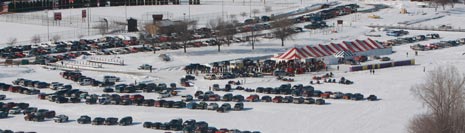
WCSFO Photo by: John Durben

The 2018 sturgeon spearing season on Lake Winnebago and the Upriver Lakes is only a little over a month away, starting on Saturday February 10.  We've experienced some very cold weather the last few weeks and have some pretty thick ice developed throughout the system.  In fact, some of the local fishing clubs and conservation groups have already put out their tree lines and are now maintaining access points and plowed roads.  From what I've heard, Lake Winnebago is pretty rough though and there are quite a few cracks, so be sure to use caution and remember no ice is every 100% safe.

Many spearers are starting to wonder about water clarity so we had one of our technicians check clarity in a couple of locations today (January 8).  Attached is a map of where he checked clarity and what visibility was.  In the locations checked, clarity ranged from 7.5-10.5' with quite a bit of variability.  This is a very small sample size, but it appears that clarity is not great at this point in time.  Hopefully things will improve a bit over the next month.  We will be checking clarity again during the week leading up to the season and I will be sure to send out that update once it becomes available.

I also have attached a copy of the spearing rules and regulations for the 2018 season.  I hope everyone had a happy holiday season and I look forward to the month of anticipation that lies ahead between now and February 10!
  
Ryan Koenigs
Senior Fisheries Biologist / Winnebago System Sturgeon Biologist
Wisconsin Department of Natural Resources
625 E County Rd. Y, Suite 700
Oshkosh, WI 54901
Phone: (920)303-5450
Fax: (920)424-4404

Wednesday, May 20, 2015

LOOKING FOR VOLUNTEERS: Free Kids Fishing Tournament June 13, 2015

If you are a member of one of our officiate clubs and/or think you might be interested in participating,  volunteering, and registering your boat to help a kid and their guardian participate, that would be wonderful (they could use more fishing boats and have sponsors and prizes, etc.)

Go to
www.wioutdoorfest.com and go towards the bottom for the kids tournament.

logo2

Greater Wisconsin Kids Fishing Tournament
Saturday June 13th

The Greater Wisconsin Kids Fishing Tournament is a kids' fishing tournament designed to allow kids the opportunity to share a competitive fishing experience under the guidance of experienced anglers serving as mentors for the day.

Kids get pro style tournament on Lake Winnebago
Guest speaker Dave Csanda
Hosted by Jeff Boutin of Team Outdoors
Fishing classes by Greg Karch

Free Registration

Child Registration Form

Voulnteer Guides Needed

Mentor Registration Form

Registration Requirements

Mentor Requirements

Kids Requirements

For More Information

jeff.boutin@yahoo.com

Monday, March 3, 2014

Lake Michigan Yellow Perch Summit March 22

CHICAGO - A yellow perch summit for Lake Michigan anglers and other interested stakeholders is set for March 22 as state agencies and tribes seek to improve management of the fish fry favorite. Two decades of cooperative actions by state management agencies have prevented a complete collapse of yellow perch but have been unable to reverse the species' decline in Lake Michigan, state fisheries officials say.

"Despite a complete closure of commercial fishing and restrictive angling regulations by all the management agencies around Lake Michigan, the yellow perch population has not recovered," says Mike Staggs, Wisconsin's fisheries director. "This workshop will be a forum to update the public on what we've learned and discuss what direction we should go in the future on yellow perch management."

The summit, hosted by the Great Lakes Fishery Commission and the Illinois Department of Natural Resources, will be held at the UIC Forum, at 725 W. Roosevelt Road in Chicago. It will feature invited experts presenting the latest research on Lake Michigan ecology, yellow perch populations, fishing and management. The afternoon session will consist of small group breakout sessions where participants can comment on the information presented and provide input to Lake Michigan fishery managers.

Registration is free Great Lakes Fisheries Commission (exit DNR) website until March 15, after which a $20 fee will be charged. People also can participate via the web at a link provided them after they register.

Brad Eggold, DNR southern Lake Michigan fisheries supervisor and chair of the Lake Michigan Committee of the Great Lakes Fishery Commission, encourages Wisconsin anglers to attend the summit in person or via the web and to weigh in.

"This yellow perch summit will give Wisconsin stakeholders the chance to listen to the latest information on not only yellow perch but on all aspects of the Lake Michigan ecosystem," Eggold says.

"In addition, breakout sessions will provide an avenue for stakeholder comment and input into future management actions. This should be a very informative summit and I hope stakeholders will plan to attend or view the meeting via our webinar link."

Eggold says that possible steps by the management jurisdictions may include changes to yellow perch management, assessment and/or research.

Twenty years ago, a yellow perch summit was convened by the Great Lakes Fishery Commission to respond to what at that time was a rapid, lake-wide decline in abundance of yellow perch. Significant numbers of yellow perch were not surviving their first year, which meant the aging adult populations were not being replaced readily by new generations of perch in Lake Michigan.

A yellow perch task group was created and developed and implemented a research strategy to explore the causes of declining yellow perch populations. Wisconsin and other states closed the commercial perch fisheries in their waters and adopted restrictive bag limits and closed seasons to help preserve spawning age adults.

At the March 22 meeting in Chicago, participants will learn about research results and management information resulting from those actions, Eggold says.

The Great Lakes Fishery Commission was established in 1955 by the Canadian-U.S. Convention on Great Lakes Fisheries. The commission coordinates fisheries research, controls the invasive sea lamprey and facilitates cooperative fishery management among the state, provincial, tribal and federal management agencies.

FOR MORE INFORMATION CONTACT: Brad Eggold, 414-382-7921

Wednesday, July 18, 2012

Drought conditions worsen in southern half of Wisconsin

50 counties now at increased fire danger levels

MADISON – The continued lack of significant rainfall in the southern half of Wisconsin has increased drought conditions and raised the fire danger to extreme, very high or high in 50 southern and central counties.

Coping with drought

The lack of rain is lowering water levels on streams and rivers, making navigation more difficult and increasing the number of fish kills. There have been reports of private wells going dry, and some municipalities are placing restrictions on water use. The hot temperatures and low water levels are increasing the risk of blue-green algae outbreaks and concentrating waterfowl in areas that have been known to have outbreaks of botulism.

“The drought is affecting everyone – with farm crops in jeopardy, fire danger, and well impacts, and more,” said Department of Natural Resources Secretary Cathy Stepp. “DNR is doing everything it can to share information and expedite approvals for wells and pumping when we can without endangering the long term health of natural resources. Our hearts go out to people struggling with the dry conditions.”

The Department of Natural Resources has launched a new Web page intended to help the public find drought-related DNR information and assistance. People can go to dnr.wi.gov and search for the keyword drought.”

Fire conditions

Fire danger levels as of July 17 were at extreme in 25 southern counties and very high or high in another 25 central counties. DNR fire control officials have been responding to 10 to 15 fires a day, and since June 1 there have been more than 275 fires. A 40-acre fire closed a westbound lane of Interstate 90-94 Monday. An Army National Guard helicopter assisted in fire suppressing the fire with water drops.

“With these tinder dry conditions, equipment caused fires have become the number one cause of fires, mostly with hot vehicle exhaust systems or farm equipment,” says Trent Marty, DNR fire prevention director.

Emergency burning restrictions remain in place in all or parts of 19 counties. The restrictions prohibit any outdoor burning -- outside of fire rings in campgrounds -- smoking outdoors or disposal of ash or charcoal. In addition, even campfires within fire rings have been banned at four state park and forest properties including Southern and Lapham Peak units of Kettle Moraine State Forest, Richard Bong State Recreation Area and Big Foot Beach State Park. Park officials caution that without rain soon, the fire prohibitions may be expanded to other properties.

Water concerns

DNR officials are receiving and reviewing applications for emergency permits to pump water for crop irrigation from lakes and rivers. DNR is approving permits for irrigation from lakes and rivers where the withdrawal will not have a negative impact on fisheries or other aquatic life or on other users of the waterway.

The agency has been receiving six to 10 applications a day for new high capacity wells for irrigating crops and is approving the applications where the new wells will not have a negative impact on other private wells. To date there have been numerous reports of private wells going dry, but as of yet no reports of municipal wells going dry.

State dam safety officials are notifying dam operators of their responsibility to maintain a minimal flow of water below dams, as some operators have reportedly begun to hold water back to maintain water levels on lakes, flowages and impoundments.

“Dam operators need to ensure they maintain minimal flow from their dams to ensure fish health and to ensure there is adequate flow for the dilution of wastewater from municipal treatment plants and other industries and operations downstream,” said Bill Sturtevant, state dam safety engineer.

Fish kills

State fisheries biologists have entered more than 31 verified fish kills since the beginning of June, with more being investigated.

“The earlier fish kills were primarily due to low water levels resulting in low dissolved oxygen levels,” says Paul Cunningham, DNR fisheries habitat coordinator, “but lately we’ve seen more thermal-related fish kills. The water has just gotten too hot for many of our cold-water species like northern pike.”

Fisheries biologists have started to deny some applications for chemical control of aquatic weeds, because of the additional stress the control may have on fish populations.

Beach and swimming concerns

The hot, dry weather is fueling excessive algae growth as the increased water temperature speeds up cell growth and division. Blue-green algae, which are found naturally in Wisconsin lakes and can produce toxins that pose a health threat to people, animal and pets, are becoming a problem in waters with a history of blooms, like Lake Winnebago and Tainter/Menomin lakes, but are in places where blooms are normally not a problem, DNR water leaders report.

DNR staff are fielding more calls on the algae Cladophora from property owners and beachgoers all along the Lake Michigan coast, says Steve Galarneau, who directs the DNR Office of the Great Lakes. The algae, naturally found in Lake Michigan, breaks off from the rocks on the lake bottom and washes ashore, where it smells and looks foul as the algae and aquatic life it carries decompose.

Zebra mussels and quagga mussels proliferating in Lake Michigan are helping create the conditions for more of the algae to grow, along with the warm water temperatures and sunny skies. “Cladophora has been a problem for decades. There are good blocks of time and bad blocks of time during a year, and this is a particularly bad period of time,” he says. “We empathize with people concerned about how it looks and smells. We encourage people to avoid swimming through cladophora or coming in contact with the algae that’s washed ashore because it may harbor harmful bacteria.”

Boating safety

With low water levels on lakes and rivers (USGS Wisconsint streamflow) (exit DNR), boaters need to be especially cautious of navigational hazards that may not have been apparent with higher water levels. Stumps and sand and rock bars may all be closer to the surface, especially on river systems. The Rock and Wisconsin rivers in particular are very low and navigation is difficult in some stretches.

Wildlife health concerns

U.S. Fish and Wildlife Service staff have collected approximately 50 dead birds, primarily mallards, wood ducks and teal as well as pelicans, shore birds, and great blue herons on the northern end of Horicon Marsh. Specimens have been submitted to the National Wildlife Heath Center for confirmation, but officials highly suspect that botulism is the cause. They will be conducting daily monitoring of other state and federal wildlife areas where botulism has caused waterfowl deaths in the past.

Thursday, January 19, 2012

WI State HS Ice Fishing Championship

The Second Annual Wisconsin State High School Fishing Championship is coming up fast. WCSFO supports programs like this because we want to see the younger generation get involved in our Sport. They are our future. We need more programs like this.

-------------------------

The purpose of the tournament is to support and promote students respectfully enjoying the outdoors.

Feb 25. Menomonie Park, Oshkosh, WI. This tournament is in conjunction with Battle on Bago.

1. High School students form teams of 5-10. $25/team. There is no limit to the number of teams per school.

2. Your team rosters, registration and $25/team must be received by Wednesday Feb 22. Email Greg Franzen at franzengreg@aasd.k12.wi.us to get the registration form. Fill it out, write checks to Oshkosh SW Rotory and send to: 


Greg Franzen

Appleton West HS

610 N. Badger Ave.

Appleton, WI 54914

3. All students must be from the same school.

4. Each team must have an Adult School Approved Chaperone/Coach that is present during the whole tournament and prize distribution. Teams must be predetermined and are allowed to fish together, but please keep their catches separate.

5. Students must catch and land all fish that are registered. Setting the hook, fighting and landing the fish must be done by students. Chaperones are not allowed to physically assist in anyway in the landing of a fish.

6. Chaperones are allowed to fish as long as they keep their fish separate at all times from the students’ catch.

7. Fishing for the HS tournament will be from 7:00am-1:30pm. You do not need to stop at the park before fishing.

8. Be in line to register fish by 2:00pm at the Tent at Menomonee Park in Oshkosh. You can weigh in 10 fish/team. Fish must be walleye, panfish(perch, bluegill or crappie), white bass or burbot.

9. The awards and prize drawings will begin at approximately 2:30pm.

10. The top three teams, based on weight, will receive a small trophy. The top 3 teams will get to pick a door prize in the order of finish. The remainder of teams’ names will be put into a drawing to pick a door prize. A list of door prizes will be sent out before Feb 25.

11. Teams are encouraged to sell raffle tickets for Battle on Bago. Schools will be reimbursed 60% of their raffle ticket sales. A check will be made out to the schools outdoor club fund and is meant to be used to promote students in the outdoors, especially fishing. The check will be sent out before the next school year. The tickets are to be sold for $5/each or 5 for $20. Make sure the stubs, extra tickets and money to Greg Franzen (see address above) by Wed Feb 22.

12. If for some reason, the HS portion of Battle on Bago gets cancelled, we will put all teams into a drawing at noon on Feb 25. We hope one advisor from each team can make it to Oshkosh to pick up the door prize.

13. Battle on Bago or its organizers can not ensure the safety of any participant. Going onto the ice can be dangerous and deadly. Safety is not the responsibility of Battle on Bago. Please exercise extreme caution on the lake. Lake Winnebago can be a very dangerous lake with unstable ice.

14. Ties will be decided by length of longest fish.

15. Teams are to take their fish with them and make every effort to clean and eat the fish.

16. Hotel information can be found at http://www.battleonbago.org/general-information/lodging.

-- REGISTRATION FORM – Click Here

Wednesday, August 3, 2011

WDNR Weekly News Article - Winnebago walleye fisheries featured in new video

MADISON -- A new video shows why Lake Winnebago boasts one of the state's premier walleye fisheries and how the Department of Natural Resources partners with anglers and other partners to keep it strong.

Winnebago Walleye Fishery is the introductory piece in a series about this frying pan favorite and the inland lake it calls home. Three more episodes will be posted in August.

Winnebago Walleye Fishery [VIDEO Length 3:25]

A 2006 economic impact study found that walleye were the favorite target by an overwhelming majority of anglers who fish the Winnebago system and say they target a specific species. The study, conducted by UW-Extension, UW-Green Bay and the DNR, also found that angling on the system generates a total impact of $234 million on the local economy and supports 4,200 jobs.

Tuesday, February 15, 2011

52 fish over 100 pounds speared in first three days of sturgeon season

OSHKOSH - Big fish and challenging travel conditions were the story during the first three days of the Lake Winnebago System sturgeon spearing seasons.

Genske sturgeon
Josh Genske of Sheboygan speared this 185 pound, 80.2 inch female sturgeon Feb. 14, the largest fish taken in the first three days of the Lake Winnebago System seasons.
WDNR Photo

Through the end of spearing hours Monday, 881 fish system-wide had been harvested, with 52 of them, or 5.1 percent, weighing more than 100 pounds, according to Ron Bruch, Department of Natural Resources fisheries supervisor.

That includes the 185-pound, 80.2-inch female that Josh Genske of Sheboygan registered at the Calumet Harbor Station on Valentine's Day, and the 172.7-pound, 76.9-inch female registered by Jeffery Nozar of Oshkosh on opening day.

Those fish weigh in as the third and fifth largest sturgeon speared since DNR began keeping harvest records in 1941. Registration of all harvested fish began in 1955.

Seven of those top 10 fish have been speared in the last three years, Bruch says.

"The big fish we see now began growing into the ‘big fish’ category (100 pounds or more) just at the time when our new regulations were put in place to provide greater protection to them," Bruch says. "That's resulted in the impressive numbers of big fish in an expanded population overall of lake sturgeon we currently have in the Winnebago System."

Bruch says it's possible that the season could run the full 16 days allowed under law.

"Given the changing travel conditions on Lake Winnebago, it appears spearers will have many more days, possibly a full 16 days this year, to add to the top 10 list of biggest fish."

A list of the top 10 largest fish can be found on the Lake Winnebago System Sturgeon Spearing Season page of the DNR website.

Travel will likely be difficult for spearers

The deep snow and drifts spearers encountered on opening day of the seasons, Feb. 12, made it difficult to get around on the lake. That problem was compounded when warmer temperatures melted snow and made travel very sloppy. Windy conditions forecast for this week will push ice around, although colder temperatures forecast for the weekend may freeze up the slop and improve travel conditions by next week. "There's going to be a major adjustment for spearers to contend with over the next few days," Bruch says.

Spearers were closing in on the number of adult females that would trigger closure of the Upriver Lakes season. After Monday, there were 16 adult females left before hitting the trigger for the Upriver Lakes adult female harvest cap.

Lake Winnebago spearers after Monday were about one-third of the way to hitting the trigger for adult females on the big lake. Current updates are available on DNR's Lake Winnebago 2011 Sturgeon Spearing Season page.

Thursday, February 10, 2011

Sturgeon Spearing Season Opens This Weekend - February 12

We're getting right down to the wire now, and I thought you might be interested in some new Lake Winnebago water clarity reports our crew collected over the weekend. As of Saturday February 5, the water clarity has generally improved somewhat across the lake since my last water clarity report two weeks ago, from 12 to nearly 13 feet on average (see report below). The best water appears to be in the south and along the east shore, although I have heard that there may be some other local areas of exceptionally clear water, and some areas where the water is somewhat turbid. The biggest change in the last couple of weeks is the increase in snow on the ice.  [Full Story and More]

Wednesday, January 19, 2011

4th Annual Battle on Bago

Make Plans to Fish the 4th Annual Battle on Bago

February 25th – 26th at Menominee Park, Oshkosh, WI

Tournament participants may begin fishing at 6am on Saturday, February 26th on Lake Winnebago only. Each participant may register one fish per ticket with no limit to number of tickets an individual can purchase. All state battleonbago2011regulations and bag limits apply to this rule and no person may bring in more than the legal limit of fish allowed which include: Walleye, panfish (perch, bluegills, crappies), whitebass or burbot (eelpout).

Cash prizes will be determined by the weight of a single registered fish. In the event of a tie, the first fish registered with the same weight takes priority so participants are encouraged to weigh fish as early as possible. Otter Street Fishing Club will be handling the weigh-in with two scales in order to expedite the weigh-in process. All participants must be in line at Menominee Park no later than 1:30pm. Prizes will be awarded by 4pm and you do not have to be present to win. Cash prizes will be mailed within 7 days.

Click Here… for more information about Battle on Bago

Tuesday, July 13, 2010

First sturgeon stocked from renovated Wild Rose Hatchery


Four waters stocked to open new era in restoration
WILD ROSE – Wisconsin's efforts to restore lake sturgeon to inland waters took a leap forward last week as the renovated Wild Rose State Fish Hatchery sent its first sturgeon out the door to new homes in four Wisconsin waters.

On July 7, DNR fisheries crews stocked more than 6,100 tiny sturgeon in the Baraboo River in Baraboo, returning the prehistoric species to that water for the first time since the 1800s, when dams built on the river, along with overfishing and water pollution, helped doom their populations. An audio slide show recording this historic return is available on the Department of Natural Resources website.On July 9, another 7,400 sturgeon, spawned from fish from the Yellow River in northwest Wisconsin and raised at Wild Rose, were returned to that river, to the Clam River Flowage in Burnett County, and to Minong Flowage in Douglas County.
"This is really good news," says Ron Bruch, DNR senior sturgeon biologist and co-leader of the agency's statewide sturgeon team. "We have the Wild Rose facility online and staff have shown they can produce the quality and quantity of lake sturgeon we need to really look well into the future for our population restoration needs."
The second phase of renovating Wild Rose State Hatchery is about complete, giving anglers and the Wisconsin's fisheries program state-of-the-art facilities for raising cool-water fish including lake sturgeon, northern pike, walleye and musky.

Now, the sturgeon can be raised entirely inside tanks in a climate controlled building where water temperatures, dissolved oxygen, food and others aspects are carefully monitored by staff and by computers.
"It's like going from the stone age to the space age," Bruch says. "Before, we had little tanks outside, and little ability to control water temperatures and other factors. It was terrible. Those guys did a really good job considering what they had to work with, but this renovated facility really is state of the art and we expect it will let us stock more waters with more fish."
The renovated hatchery and the staff who run it are already having an impact. Sturgeon weren't scheduled to be stocked out of the facility until this fall, but so many sturgeon hatched and survived that some needed to be removed from the tanks to allow the remaining fish more room to grow, says Steve Fajfer, hatchery supervisor.

"The staff have done a fantastic job learning a whole new system and producing more fish, bigger fish and healthier fish," Fajfer says. About 60,000 lake sturgeon remain at the hatchery and will be raised to the more normal sizes for stocking, about 6 to 9 inches for fingerlings, and 10 to 14 inches for yearlings. The fingerlings will be planted this fall, and the yearlings next spring, Fajfer says.

Waters planned for stocking from Wild Rose are the Menominee River in Marinette County, the Wisconsin River in Marathon County, the Wisconsin River flowage at Stevens Point in Portage County, Upper St. Croix Lake, Eau Claire River, and St. Croix Flowage, all in Douglas County, and the Namekagon River and Trego Lake, both in Washburn County.Other waters being stocked with sturgeon in 2010-2011 include the Milwaukee and Kewaunee rivers, which will receive fish raised at streamside rearing facilities along those waters, and the Fox River in Marquette County from the UW-Milwaukee Water Institute, and the Manitowish River, which will receive fish from DNR's Woodruff Hatchery.

Lake sturgeon are living fossils, relics from the Upper Cretaceous period of the Mesozoic era, and they rank as Wisconsin's largest and oldest fish, confirmed again this winter when an Appleton man speared a 212-pound, 3.2 ounce lake sturgeon that stretched 84.25 inches on opening day of the 2010 Lake Winnebago lake sturgeon spearing seasons.Historically, lake sturgeon were found throughout the Great Lakes and Mississippi River basin. They flourished in Wisconsin's boundary waters including the Mississippi, Wisconsin and Menomonee rivers, Lake Superior, Lake Michigan and Green Bay. Dams, pollution, habitat degradation and overharvest dramatically reduced lake sturgeon populations in some Wisconsin waters over the past 100 years, and eliminated them entirely from other stretches of water. Because female fish don't reproduce until they are 20 to 25, and then spawn only once every three to five years, lake sturgeon populations are very vulnerable to overexploitation and slow to rebuild.
"Wisconsin's Lake Sturgeon Management Plan" (pdf) calls for restoring lake sturgeon to many waters in its historic range. DNR will be updating the plan this year and seeking input from people outside the agency interested in sturgeon management. Wild Rose Fish Hatchery will play a key role in that plan, along with protective regulations, research, dedicated funding for sturgeon restoration, and other factors, says Karl Scheidegger, a DNR rivers biologist and co-leader to the state sturgeon team.
"The new Wild Rose cool water propagation facility will give the fisheries program the ability to restore multiple sturgeon populations for many years to come," Scheidegger says. "And that, we hope, means that down the road more people will be able to experience these remarkable fish."

Wednesday, June 30, 2010

DNR to host series of Winnebago walleye management meetings this summer

Aim is to collect input for next 20 year management plan

GREEN BAY – The Winnebago System walleye population and its world class walleye fishery are the topic of four public meetings in northeastern Wisconsin in July and August as the state starts updating its plan for managing both.

“We’ve worked closely with the public to improve the walleye fishery on the Winnebago System for the last 20 years, and the result has been a tremendous success,” says Kendall Kamke, a Department of Natural Resources senior fisheries biologist in Oshkosh.

“But it is time to take a thorough look with the public at the progress we have made in understanding and managing our walleye population and fishery and look ahead to the next 20 years.”

So DNR will be holding four meetings in July and August to provide people information about the status of the Winnebago System walleye population, fishery, and management program and to collect public input to update the Winnebago Walleye Management Plan.

The Winnebago System, which includes lakes Winnebago, Butte des Morts, Winneconne and Poygan, and the connected rivers upstream, the upper Fox and the Wolf, is known nationally for its outstanding walleye fishery. A 2007 study (exit DNR) by the UW Extension and DNR showed that anglers annually spend up to 2 million hours on the Winnebago System pursing primarily walleye, as well as other gamefish in a fishery that generates a total economic impact of $234 million annually and 4,300 jobs.

Topics to be discussed at the meetings include walleye population and harvest estimates, adult walleye size and age distributions by sex from springs 1989-2010, the impact of spring water flows and levels on walleye recruitment, the walleyes’ movement and migrational patterns, and the assessment techniques DNR uses to develop population estimates.

The meetings are set for the following dates and locations:

•July 13, Shiocton, 7 p.m., River Rail, N5547 River St.
•August 10, Menasha, 7 p.m., Germania Hall, 320 Chute St.
•August 11, Quinney, 7 p.m., Quinney Fishing Club, Quinney Road.
•August 12, Fond du Lac, 7 p.m., Marghael’s Hall, N7688 Van Dyne Rd.

Sunday, February 21, 2010

3rd Annual Battle on Bago (Fish Contest)

Contact: Glenn Curran, (920) 410-0313 (email: info@battleonbago.org)
Website: http://www.battleonbago.org/
Details: Battle on Bago Dates:2/26/10 - 2/27/10 Event Type:Fishing Tournament/Fisheree
Location: Lake Winnebago State: Wisconsin Contact:Glenn Curran Contact Email: info@battleonbago.org Contact Phone: (920) 410-0313Web Site: http://www.battleonbago.org Details: 3rd Annual Battle on Bago at Menonimee Park Oshkosh. Over $60,000 in cash and prizes to be given away. All proceeds are directed towards various youth programs and conservation efforts in the state of Wisconsin. Please visit our website for updated information on ticket sales, and other tournament information.

Tuesday, January 26, 2010

Lake Winnebago system seasons open Feb. 13

Higher harvest caps, bigger fish on tap for 2010

OSHKOSH - Spearers will have a better chance of harvesting a sturgeon -- and a really big sturgeon at that -- when the 78th consecutive spearing seasons get underway Feb.13 on the Lake Winnebago system.

The system-wide harvest cap for adult females for the 2010 season has been increased to 740 from last year’s 630, and is nearly double the limit set in 1997 when the state Department of Natural Resources started capping harvest.

At the same time, the number of trophy size fish in the population has been increasing significantly, resulting last year in spearers harvesting 42 sturgeon between 100 and 168 pounds, the highest percentage of trophy-size fish ever recorded in the history of the fishery.

“The resurgence of 150-plus pound fish in the population over the last 10 years adds a potential super-trophy element to the fishery that spearers haven’t seen since the 1950s,” says Ron Bruch, DNR fisheries supervisor in Oshkosh and the lead sturgeon biologist since 1990.

“It appears to be only a matter of time before the 188 pound record set by Dave Piechowski in 2004 is broken,” he said.

DNR crews frequently handle fish over 200 pounds in their population assessments.

The current sturgeon population in the Winnebago System is the largest in the world. It is estimated to be at more than 58,000 fish including 47,100 fish over the 36-inch minimum size limit in the spear fishery. Of those legal sized-fish, 5,900 are estimated to be juvenile females, 14,800 adult females, and 26,400 adult males.

Harvest of lake sturgeon is tightly controlled because the species is especially vulnerable to overharvest due to their slow growth and late maturation. Females don’t spawn for the first time until they are 21 to 33 years old, and then they spawn only once every three to five years.

Ice and other spearing conditions

As of Jan. 25, 2010, there were 16 to 18 inches over most of the lakes, although there are areas of the lake with thinner ice. Three people have recently drowned on Lake Winnebago after the vehicles they were travelling on went through the ice. Anyone traveling on the lakes should check the ice first to make sure the area they are in is safe, Bruch says. Fishing clubs around the lakes have scouted and marked roads with upright Christmas trees placed every quarter-mile along the road. Downed Christmas trees indicate a crack or unsafe ice – stay away from these areas.

Reports also indicated that the water in the Winnebago lakes was “gin clear,” although clarity can change rapidly due to run-off events and winter algae blooms.

More details about the two separate seasons

The Lake Winnebago system now holds two separate, concurrent seasons: on Lake Winnebago and on the Upriver Lakes of Butte des Morts, Winneconne and Poygan. Spearers can only participate in the season for which they have a spearing license.

The rules are the same on Lake Winnebago as they are on the Upriver Lakes, with the exception of different harvest caps and triggers. The total harvest caps for Lake Winnebago are 280 juvenile females, 666 adult females and 800 males; for Upriver Lakes, 70 juvenile females, 74 adult females and 200 males. Total harvest from all the lakes is tracked each day to ensure that system harvest caps are not exceeded.

Spearing hours for both seasons run from 6:30 a.m. until 12:30 p.m. daily, with a bag limit of one lake sturgeon per license and a minimum length limit of 36 inches.

The Lake Winnebago season runs from Feb. 13, 2010, through Feb. 28, 2010, or until the pre-set harvest cap for Lake Winnebago is reached, OR the pre-set harvest cap for the entire Winnebago System is reached, whichever comes first.

The Upriver Lakes season runs from Feb. 13, 2010, through Feb. 28, 2010 on Lakes Butte des Morts, Winneconne and Poygan, or until the pre-set harvest cap for the Upriver Lakes is reached, or the pre-set harvest cap for the entire Winnebago System is reached, whichever comes first.

Participation in the Upriver Lakes season was determined by a lottery for the required sturgeon tag, with 500 people selected from among the more than 4,000 who submitted an application by Aug. 1, 2009.

Successful lottery winners had until Oct. 31, 2009, to purchase a spearing license for the Upriver Lakes. Sturgeon spearing licenses for the Lake Winnebago season were not limited and were available to those spearers who purchased them by Oct. 31, 2009.

Spearers can only participate in the season for which they have a spearing license. Any fish harvested from Lake Winnebago must be registered at one of the sturgeon registration stations on Lake Winnebago. Any fish harvested from Lakes Butte des Mort, Winneconne or Poygan (the Upriver Lakes) must be registered at one of the sturgeon registration stations on the Upriver Lakes.

A full listing of regulations for the Winnebago System sturgeon spearing season can be found on the Lake Winnebago sturgeon page of the DNR Web site or at DNR service centers. Daily harvest updates will be posted to the page.

Get Your Copy of People of the Sturgeon autographed

Spearers and lake sturgeon enthusiasts will have an opportunity on opening day to buy a copy of People of the Sturgeon; Wisconsin’s Love Affair with an Ancient Fish and have it autographed on opening days by Bruch and his fellow co-authors.

Kathy Schmitt-Klein, a writer with Wisconsin Sea Grant, and Fred Binkowski, senior fisheries scientist with the UW-Milwaukee Great Lakes WATER Institute, are co-authors of the glossy, 292-page book, which also features the photographs of the late Bob Rashid.

The three authors will be signing books between 11-noon Feb. 13 at Wendt’s on the Lake Restaurant, on the west shore of Lake Winnebago in Van Dyne. The book publisher, the Wisconsin Historical Society Press, will be at Wendt’s as well that day, selling copies of the $29.99 book.

People of the Sturgeon culls the photo albums, newspaper clippings and personal recollections of Wisconsin families to show how the huge, homely lake sturgeon found in the Lake Winnebago system captured their hearts, and with their help, returned from the edge of extinction. The system’s sturgeon population is now the world’s largest self-sustaining population of lake sturgeon, a fish that can live longer and grow bigger than a man.

“The traditions in some families go back to great-grandfathers and great-uncles spearing with the Stockbridge Indians along the east shore of Lake Winnebago in the late 1800s and early 1900s,” Bruch says. “We attempted to capture these traditions and the essence of our Winnebago lake sturgeon culture in People of the Sturgeon.”

The book was the culmination of the efforts of many individuals over the last four years, including a $25,000 donation from Sturgeon for Tomorrow. Proceeds from sale of the book will help support the DNR’s Lake Winnebago sturgeon management program.

Sunday, January 10, 2010

Monday, December 28, 2009

3rd Annual - BATTLE ON BAGO...

Supporting Youth and Environmental Conservation Efforts

Battle on Bago was created in 2007 by a group of five individuals in order to support area youth and conservation efforts throughout the state of Wisconsin. Our strong foundation was built with the support of many area companies, volunteer efforts, and a dedicated committee resulting in net proceeds of $10,500 in 2008 (our inaugural year), and $40,340 in 2009.

Beneficiaries receiving funds embody our mission statement “For Kids & Conservation” and serve as just the beginning of a long list of organizations and youth Battle on Bago will benefit in the future. We continue to look for new ideas, partner with more businesses, and increase volunteer efforts each year to better serve all who attend our event. With over 3,000 in attendance last year from Indiana, Illinois, Iowa, Minnesota, Michigan, and all over Wisconsin, we anticipate Battle on Bago 2010 to once again exceed our expectations and continue to have a positive impact on our youth and conservation efforts.

If you or your business would like to support “Kids and Conservation” please feel free to contact one of the committee members or send an inquiry to info@battleonbago.com.

February 26 & 27, 2010
Menominee Park
Oshkosh, WI

Tuesday, July 14, 2009

August 1 deadline for upriver sturgeon permits

OSHKOSH – Sturgeon spearers have until Aug. 1 to apply for the 2010 Upriver Lakes sturgeon spearing drawing. Applications can be made through the Online Services link of the Department of Natural Resources Web site or can be purchased at any Department of Natural Resources license vendor.

Participation in the Upriver Lakes sturgeon spearing season -- on Lakes Butte des Morts, Winneconne and Poygan -- is limited to 500 people, with participants drawn through a drawing. Those people selected in the drawing will be notified by Sept. 1 that they are authorized to buy a license to participate in the Upriver Lakes season and must buy that tag by Oct. 31, 2009.

Spearers who applied for but are not authorized to purchase an Upriver Lakes license receive a preference point toward the next year’s drawing, and can still purchase a license to participate in the Lake Winnebago spearing season that runs at the same time. Licenses for the Winnebago season must be purchased by Oct. 31, 2009, as well.

In 2009, 4,031 people applied for the Upriver Lakes drawing, and the DNR sold 10,239 licenses for spearing on both Winnebago and Upriver lakes. The 2009 season ran five days on the Upriver lakes, and the Winnebago system season was open three additional days.

The growing popularity of the two seasons – there’s been a 20 percent increase in spearing licenses in recent years -- and recent research work showing that lake sturgeon mature more slowly than originally thought underscore the importance of using a drawing to manage the harvest on the Upriver Lakes, according to Ron Bruch, senior sturgeon biologist for the Wisconsin Department of Natural Resources.

“The Upriver Lakes have had exceptionally high success rates: two of every three spearers get their fish compared to Lake Winnebago, where only one of eight get their fish;” Bruch says.

Plus, the fish found in the Upriver Lakes in the winter when the spearing seasons occur are a mix of adult migrants from Lake Winnebago staging in the Upriver Lakes before completing their run upstream in spring to spawn, and juvenile fish that are not mature yet. These juvenile fish may measure 36 inches or more, making them large enough to be legally harvested.

Research that Bruch and his Lake Winnebago based fisheries crews have been conducting is showing that it takes even longer than originally believed for lake sturgeon to fully mature. “We found that both male and female lake sturgeon experience a long protracted period of maturation.”

Females begin to mature at 48 inches -- about age 21 – and halfway through the maturing process at 55 inches or about age 27. All females are finally fully mature at 60 inches, about age 33. Male lake sturgeon first begin to mature at around 40 inches --about age 14. The fish are half way through the maturing process at 47 inches, or about age 20, and 100 percent mature when they are 56 inches or about age 30.

“The bottom line to all of this is it takes a long time for lake sturgeon to mature; and then all of the fish of specific age class won't be mature for another 11 to 16 years - all the more reason to manage harvest of this species very carefully,” Bruch says.

Tuesday, February 24, 2009

2009 Lake Winnebago sturgeon spear season one for the record books

OSHKOSHThe lunker’s still out there.

The 230-pound behemoth lake sturgeon netted by state fish crews in the fall eluded the record 10,239 licensed spearers who took to the ice for the 77th consecutive 2009 Lake Winnebago system sturgeon spearing season.

But the separate seasons on the big lake and the Upriver Lakes were still fit for the record books. Sturgeon history was made on day 2 of the season when Amy Van Beek of Menasha threw an 80.8 inch, 168.8 pound female sturgeon out of her shack on Lake Poygan. It was the largest fish ever harvested by a woman spearer, the largest fish ever registered from the Upriver Lakes, the fourth largest fish by weight on record and the sixth longest fish on record.

Van Beek’s fish was one of 32 sturgeon harvested that weighed more than 100 pounds; in all, spearers took 1,512 fish during the 2009 sturgeon spearing season on the combined lakes of the Winnebago pool which includes Lake Winnebago and the Upriver Lakes -- Poygan, Winneconne, and Butte des Morts.

Last year, spearers registered 42 sturgeon that weighed between 100 and 172 pounds, the highest percentage of trophy-size fish ever recorded in the history of the fishery. A 100-pound sturgeon can be anywhere from 65 to 80 years old; heavier sturgeon are proportionally older.

“The number of these trophy-size fish has been increasing significantly over the last decade,” said Ron Bruch, DNR senior sturgeon biologist. “This is due to the distribution of age classes currently present in the population and due to the impact of harvest regulation implemented over the last 17 years designed to increase survival of these large fish.”

The 2009 season opened on a partly sunny day with light wind that didn’t chill the excitement in the record 6,853 shanties on the lakes for the first day of the spearing season. “The season ended with a snowstorm and strong winds that created white-out conditions on Lake Winnebago, but that didn’t stop large numbers of dedicated sturgeon spearers from driving out on the ice to their shacks in an attempt to get their sturgeon on the 8th and last day of the 2009 season,” Bruch said.

The Upriver Lakes season, which is limited to 500 licenses and is controlled by a lottery, was open five days, closing Wednesday, Feb. 18. The focus then shifted attention to the big lake, where the season ran another three days. “The average season length on Lake Winnebago since we've gone to the 6-hour spearing days in 2002 is 11 days,” said Bruch.

“We are always glad to see the season go longer than be very short -- at least into or through two weekends -- to give the spearers ample opportunity to get out on the ice, and to give the local establishments an opportunity to take advantage of the extra patrons that sturgeon spearing produces while the season is going on,” he said.

Of the 1,512 fish speared, 301 were juveniles (86% of quota), 615 adult females (97.6% of quota), and 596 males (59.6% of quota). Harvest caps for the 2009 season were set at 350 juvenile females, 630 adult females, or 1,000 males.

“At this point, it does not appear that we exceeded our 5 percent exploitation limit for any of the three harvest categories (juvenile females, adult females, or males) but we won't know for sure until all the data are entered,” Bruch said.

Wisconsin has the world’s largest lake sturgeon population. The DNR has been intensively managing the lake sturgeon population and fishery for more than 60 years, conducting annual surveys and working closely with the public to maintain safe harvest levels, Bruch says.

The current lake sturgeon population in the Winnebago System is estimated at about 60,000 fish ages 1 to 80, including 25,000 males and 13,000 females in the adult spawning stock.

This season, 4,031 people applied for the Upriver lottery; 500 licenses were authorized and 490 Upriver licenses were sold. The DNR also sold 9,749 licenses for Lake Winnebago. In all, 10,239 licenses for spearing on both Winnebago and Upriver lakes.

“We have seen a 20 percent increase in sturgeon spearing license sales in the last two years,” said Bruch. “I believe the success of our management program in producing and sustaining this high quality fishery with a high success rate has caused interest to grow around the region, state and Midwest.”

The average success rate on the Upriver Lakes is 56 percent. The success rate on Lake Winnebago averages about 13 percent, which means that if regular sturgeon spearers apply every year, they may be able to experience spearing success six to eight times in their lifetime.

FOR MORE INFORMATION CONTACT: Ron Bruch, (920) 424-3059; Tom Turner, DNR Public Affairs Manager, (920) 662-5122

Monday, February 23, 2009

2009 Sturgeon season ends with snow and wind; 1,512 final harvest total

Lake Winnebago sturgeon spearers harvest 89 Saturday

OSHKOSH – The 2009 sturgeon spearing season on Lake Winnebago ended at 12:30 p.m. Saturday with a total of 1,512 fish taken from the combined lakes of Winnebago, Poygan, Winneconne, and Butte des Morts.

Sturgeon Biologist Ron Bruch said, “The registration tally on Friday popped the 90% trigger for adult female sturgeon which gave spearers one more day to harvest their fish on Lake Winnebago before that season closed. That day was Saturday.” The Upriver Lakes season closed on Wednesday.

Spearers took a day’s total of 89 sturgeon on Saturday including 44 female sturgeon (14 juvenile females and 40 adult females) and 35 males.

The final count for this season for both Lake Winnebago and the Upriver Lakes is 1,512. A breakdown tally is 301 juveniles (86% of quota), 615 adult females (97.6% of quota), and 596 males (59.6% of quota). Harvest caps for the 2009 season were set at 350 juvenile females, 630 adult females, or 1,000 males.

“A snowstorm and strong winds created white-out conditions on Lake Winnebago today,” said Bruch. “But that didn’t stop large numbers of dedicated sturgeon spearers from driving out on the ice to their shacks this morning in an attempt to get their sturgeon on the last day of the 2009 season.”

Bruch reported several statistics on past and current sturgeon seasons on Lake Winnebago. More regular Lake Winnebago licenses were sold in 2009 than any other year (9,596), more shanties on the ice than any other year (6,213), and the second highest sturgeon harvest (1,237) since 2004, when spearers took 1,854 sturgeon from the big lake.

The Upriver Lakes had an opening day shanty count of 640. Sturgeon taken from Upriver lakes numbered 275. There were 4,031 lottery applications and 490 Upriver licenses sold.